Quick answer
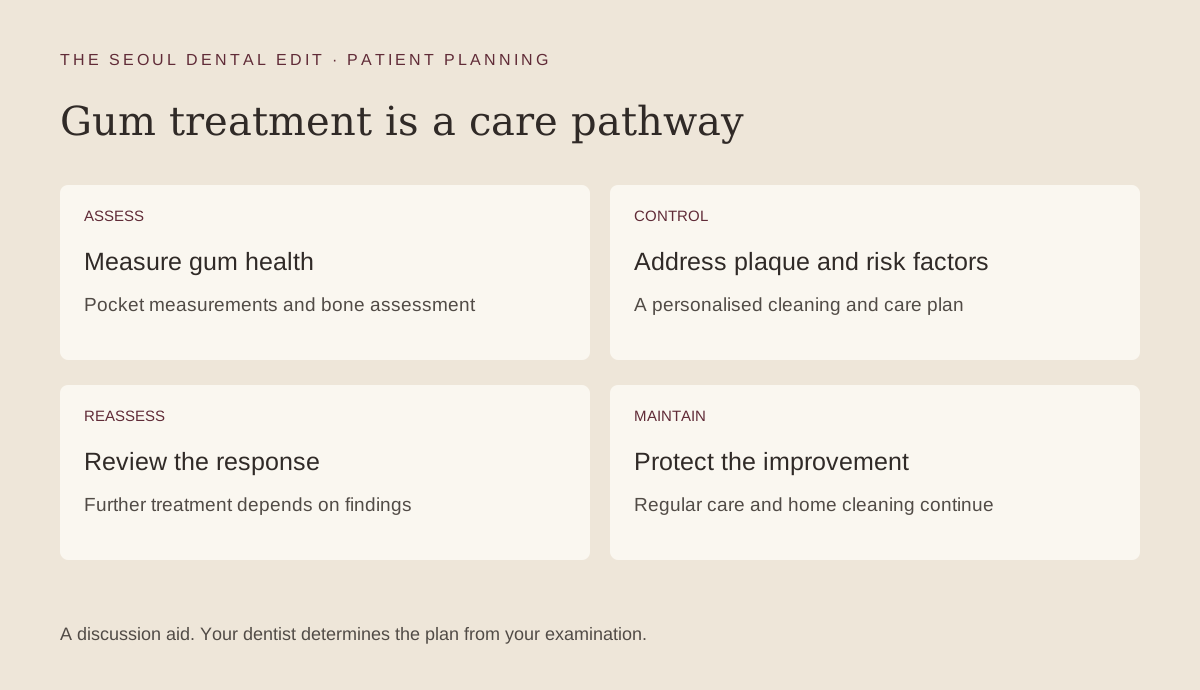
Active gum disease should be assessed and managed before finalizing elective implants or cosmetic restorations. Inflammation and changes in the gumline can affect treatment timing, design and cleaning access. Cosmetic contouring is different from treating periodontal disease. Ask the periodontal and restorative clinicians for a shared sequence, measurable readiness criteria and a maintenance plan for the finished work.
The foundation affects the final result
Veneers, crowns and implants are planned around gums and supporting tissues as well as tooth shape. Active inflammation can make the gumline less predictable and cleaning more difficult. Before elective treatment, ask whether a periodontal assessment is needed and whether any disease should be addressed first. A beautiful mock-up does not reveal what is happening below the gumline. The clinician should explain how your periodontal condition affects the design, timing and maintenance of the proposed work, especially when several front teeth or a full arch are involved.
Separate disease treatment from cosmetic contouring
Gum reshaping for appearance and treatment of periodontal disease are not the same procedure. A patient may need one, both or neither. Ask what diagnosis supports each proposed intervention and whether changing the gum contour could expose more root, affect sensitivity or alter the support around a tooth. If the tissues are inflamed, reassessment after initial care may change the cosmetic plan. Avoid committing to a fixed final tooth length or gumline before the clinician has established a stable starting point and explained any remaining uncertainty.
Plan the sequence with every clinician
A periodontist, restorative dentist and surgeon may contribute different parts of care. Request a shared sequence showing when periodontal treatment, healing assessment, impressions or scans, temporary work and final restorations will occur. Some steps may need to wait for tissue stability, and the appropriate interval depends on the procedure and site. A short trip can make coordination harder, but it does not remove the biological reasons for staging. Ask what can reasonably be completed in Korea and what would be better deferred or arranged as a later visit.
Design for cleaning, not appearance alone
Restoration contours and access between teeth affect daily maintenance. Before accepting a proposal, ask how you will clean around the final work and whether the design creates spaces that need particular aids. Implants also require continuing tissue assessment and hygiene. A history of periodontal disease should be discussed in implant planning rather than omitted because the natural tooth will be removed. Ask how the team will monitor the new restoration and what signs should lead to review, including bleeding, swelling, discharge or changes in comfort.
Evaluate the complete commitment
A quote for elective dentistry should be considered alongside the cost and time of preparatory periodontal care and long-term maintenance. Obtain baseline charts and a written handover for your home dentist. If the clinic advises postponement, ask what measurable improvement is needed before proceeding. That can make a delay purposeful rather than frustrating. Choose a plan that leaves you with tissues and restorations you can maintain after returning home, rather than one that achieves a rapid photograph but leaves unresolved disease or inaccessible cleaning areas.
Patient questions
Can veneers hide gum disease?
Veneers change tooth appearance; they do not treat disease in the supporting tissues. Have the gums assessed and any indicated care planned before committing to final cosmetic work.
Why might my final crown or implant restoration be delayed after gum treatment?
The team may need to reassess healing and tissue stability before final design or impressions. Ask what finding must improve and when it will be reviewed, rather than relying on a fixed travel timetable.
Explore related care in Seoul
These profiles describe published clinical interests and services. Compare the team and ask whether the proposed care fits your diagnosis.
- Origin Dental Clinic — Gangnam
- New York S Dental Clinic — Jongno
- Dr. KyungJin Kim — Dental consultant with a background in periodontal and implant care at New York S Dental Clinic.
- Dr. Jeong-chan Kim — Implant and general dental care at Dongdaemun Dental Clinic.
Clinical references and further reading for the explanations on this page. The guide is general patient education; your dentist determines the plan for your examination findings.
NIDCR: periodontal disease >American Academy of Periodontology: treatment and procedures >