Quick answer
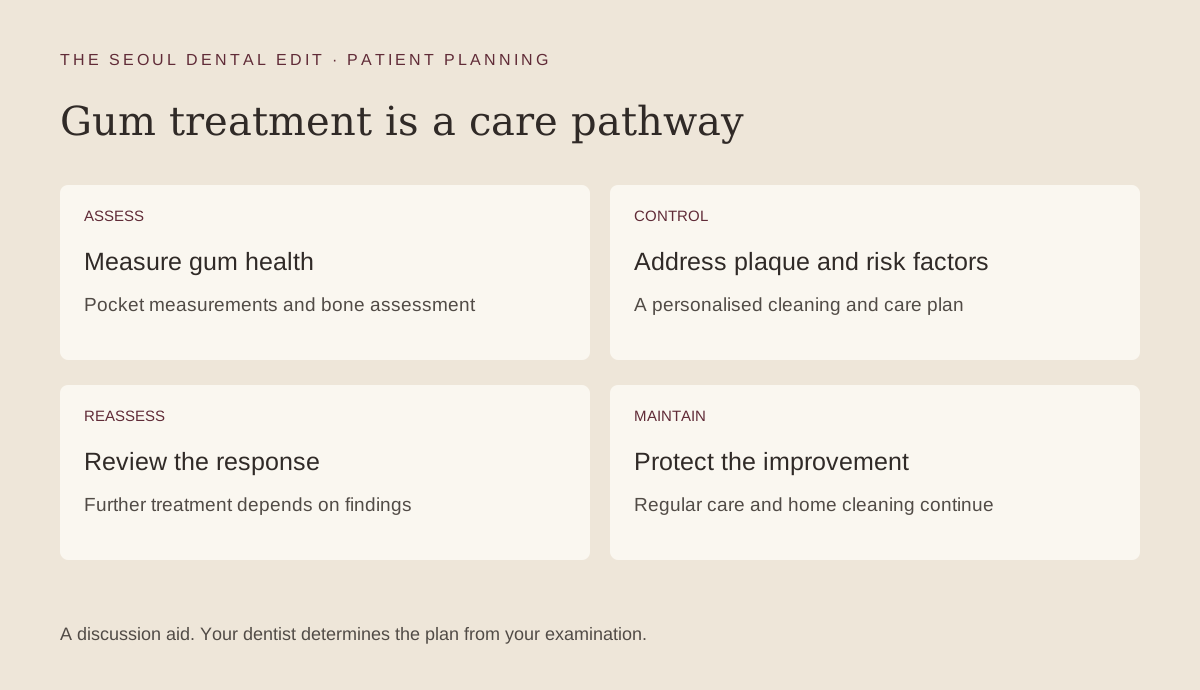
Scaling and root planing is nonsurgical treatment for deposits and disease around tooth roots below the gumline. It differs from polishing stains from otherwise healthy teeth. Treatment may be divided into areas or visits, with local anaesthesia when needed. Reassessment determines the response and whether further care is required; daily cleaning and ongoing maintenance remain part of the plan.
Know what is being treated
Scaling and root planing is a form of nonsurgical periodontal care directed at deposits and contamination around tooth roots. It is generally discussed when there is evidence of disease below the gumline, rather than simply because teeth are stained. Ask to see the pocket chart and the areas that require treatment. A recommendation should connect the procedure to your diagnosis. Clarify whether the proposed visit is routine cleaning, treatment of selected sites or a broader course of periodontal therapy, since those services involve different work and follow-up.
How the appointment is organized
The clinician may divide treatment into areas or visits according to severity, comfort and medical considerations. Local anaesthesia can be used where needed. Tell the team about sensitive teeth, difficulty keeping your mouth open or previous anxiety during cleaning. Ask how long the appointment is likely to last and whether you will be numb afterwards. If you are travelling in Seoul, avoid scheduling a formal meal or important speaking commitment immediately after an appointment without first understanding the likely temporary effects and the clinic's instructions.
What you may notice afterwards
Temporary tenderness, sensitivity or a change in how the spaces between teeth feel can occur as inflammation subsides. Gums that were swollen may look different once they become healthier. Ask which changes are expected for your mouth and what should prompt contact. The clinician should give instructions for brushing and interdental cleaning rather than leaving you to avoid sore areas indefinitely. Discuss persistent discomfort or a site that seems to worsen. Increasing swelling, significant bleeding or other unexpected symptoms should be assessed rather than attributed automatically to normal healing.
Judge the response, not just the cleaning
The purpose is to improve periodontal health and make maintenance possible. Reassessment after an appropriate healing interval checks whether bleeding and pockets have improved and whether additional care is needed. Some areas may respond well while others remain difficult to manage. Ask what measurements will be compared and whether the quoted fee includes that review. Additional treatment should be based on residual findings, not on a promise that every patient needs surgery or, conversely, that deep cleaning always resolves every stage of disease.
Keeping the benefit after travel
A short visit to Korea can accommodate treatment, but it may not accommodate the full reassessment period. Arrange who will review you at home and obtain the original pocket chart, images and details of the treated sites. Continue the tailored hygiene routine and schedule supportive care at the interval advised for your risk. If you cannot maintain a proposed schedule, tell the dentist before treatment so the plan can be made realistic. Deep cleaning has greater value when it is part of an ongoing programme you can actually follow.
Patient questions
Why are several deep-cleaning appointments sometimes recommended?
The extent of disease, areas requiring treatment, comfort and medical considerations can affect scheduling. Ask which sites each visit covers and whether the estimate includes the later reassessment.
Can teeth feel more sensitive after deep cleaning?
Temporary sensitivity or tenderness can occur as inflammation settles and root surfaces are exposed. Ask what is expected in your case and contact the clinician about persistent or worsening symptoms rather than avoiding cleaning indefinitely.
Explore related care in Seoul
These profiles describe published clinical interests and services. Compare the team and ask whether the proposed care fits your diagnosis.
- Origin Dental Clinic — Gangnam
- New York S Dental Clinic — Jongno
- Dr. KyungJin Kim — Dental consultant with a background in periodontal and implant care at New York S Dental Clinic.
- Dr. Jeong-chan Kim — Implant and general dental care at Dongdaemun Dental Clinic.
Clinical references and further reading for the explanations on this page. The guide is general patient education; your dentist determines the plan for your examination findings.
American Academy of Periodontology: nonsurgical treatment >