Quick answer
Bleeding during brushing or cleaning between teeth can indicate gum inflammation and should be assessed, especially if persistent. Gingivitis does not involve the same attachment and bone loss as periodontitis; an examination distinguishes them. Effective gentle cleaning and professional removal of deposits may help, but mouthwash alone does not replace diagnosis, mechanical cleaning or treatment of an underlying periodontal problem.
Bleeding is a finding to investigate
Gums that bleed when brushing or cleaning between teeth may be inflamed, but the pattern deserves assessment rather than self-diagnosis. Tell the dentist how long it has been happening, whether it affects one area or the whole mouth and whether there is swelling, pain or a change in your medicines. Spontaneous or unusually heavy bleeding needs prompt professional advice. Avoid assuming that bleeding is normal because it has occurred for years. The absence of pain does not establish that the supporting tissues are healthy.
Gingivitis and periodontitis are different
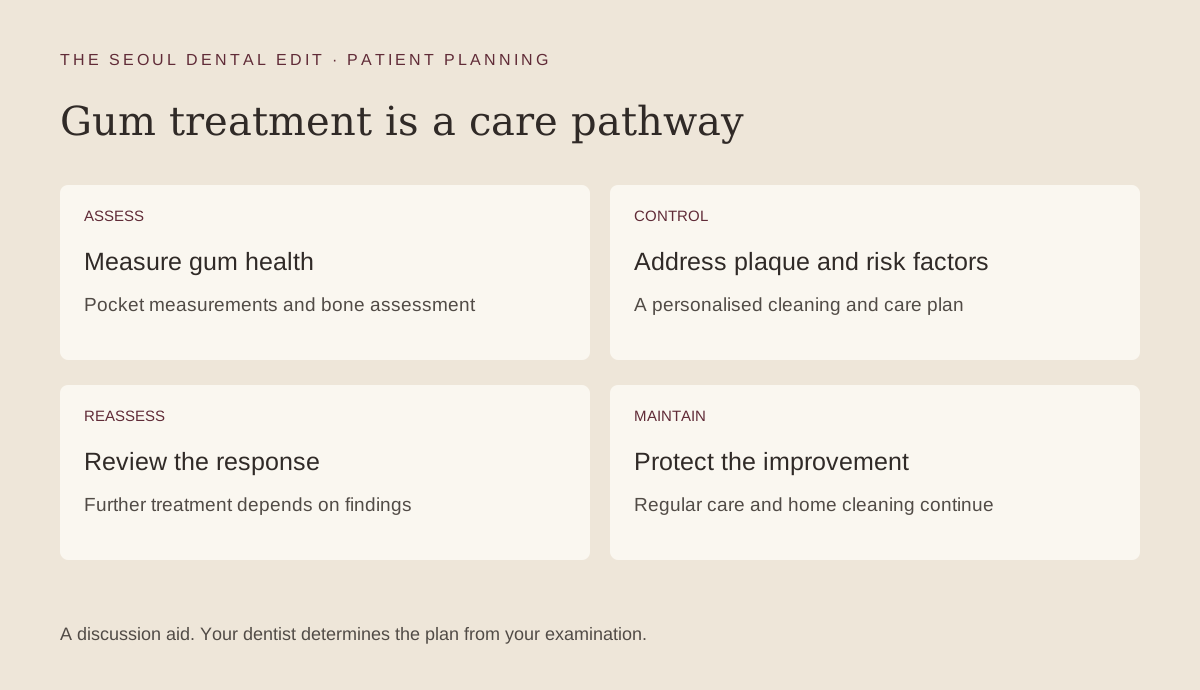
Gingivitis involves gum inflammation without the same attachment and bone loss that characterize periodontitis. The distinction requires examination and, when indicated, imaging. A photograph of red gums cannot reliably establish the extent of disease. Ask whether pocket measurements or previous records show loss of support. That answer affects the treatment and review schedule. Early inflammation can often improve with appropriate professional and home care, but an established periodontal problem requires a broader plan than simply polishing the teeth until they look clean.
Make home care practical rather than aggressive
Ask the dentist or hygienist to watch how you brush and clean between your teeth. The aim is effective plaque removal without scrubbing harder or damaging the gumline. Different spaces may need different sizes of interdental brushes, floss or other aids. Mouthwash may have a specific role, but it does not replace mechanical cleaning or removal of hardened deposits. If cleaning is painful or confusing, request a demonstration in the mirror. A technique you understand and can repeat is more useful than a long shopping list of products.
Look for local contributors
Crowded teeth, awkward restoration edges, food traps and poorly fitting appliances can make certain areas harder to clean. Tell the clinician if one site repeatedly bleeds despite careful care. The examination may identify a local issue that needs correction as well as hygiene instruction. Smoking can alter the appearance of gum symptoms, so a lack of obvious bleeding is not a reason to skip assessment. Share medical conditions and relevant medicines without making changes yourself. The dentist may coordinate with another clinician when the pattern suggests a wider health question.
Use a visit to Seoul as a starting point
If you are seeking a cleaning while travelling, ask for an assessment of the gums rather than selecting a cosmetic polishing appointment alone. Find out what improvement to expect and when persistent bleeding should be reviewed. Request a summary if further periodontal care is recommended. After returning home, continue the advised cleaning routine and arrange review rather than waiting for another trip. A useful outcome is a clear diagnosis and a sustainable maintenance plan, with any unresolved area identified for reassessment.
Patient questions
Should I brush harder when my gums bleed?
No. More pressure can injure tissues without improving plaque removal. Ask for a demonstration of gentle brushing and appropriately sized interdental aids, and have persistent bleeding examined.
Can healthy-looking gums still need periodontal assessment?
Yes. Appearance and absence of pain do not reliably describe the support around teeth. The dentist may need measurements and appropriate imaging, particularly when there is a history of periodontal disease or smoking.
Explore related care in Seoul
These profiles describe published clinical interests and services. Compare the team and ask whether the proposed care fits your diagnosis.
- Origin Dental Clinic — Gangnam
- New York S Dental Clinic — Jongno
- Dr. KyungJin Kim — Dental consultant with a background in periodontal and implant care at New York S Dental Clinic.
- Dr. Jeong-chan Kim — Implant and general dental care at Dongdaemun Dental Clinic.
Clinical references and further reading for the explanations on this page. The guide is general patient education; your dentist determines the plan for your examination findings.
NIDCR: periodontal disease >