Quick answer
Gum disease treatment in Seoul should begin with a periodontal assessment, not a cosmetic cleaning alone. The plan may include tailored home care, cleaning below the gumline, reassessment and selected further treatment where disease persists. Gingivitis and periodontitis require different expectations. Before travelling, confirm the diagnosis, treated areas, review schedule and who will provide ongoing periodontal maintenance after you return home.
What gum disease treatment in Seoul should achieve
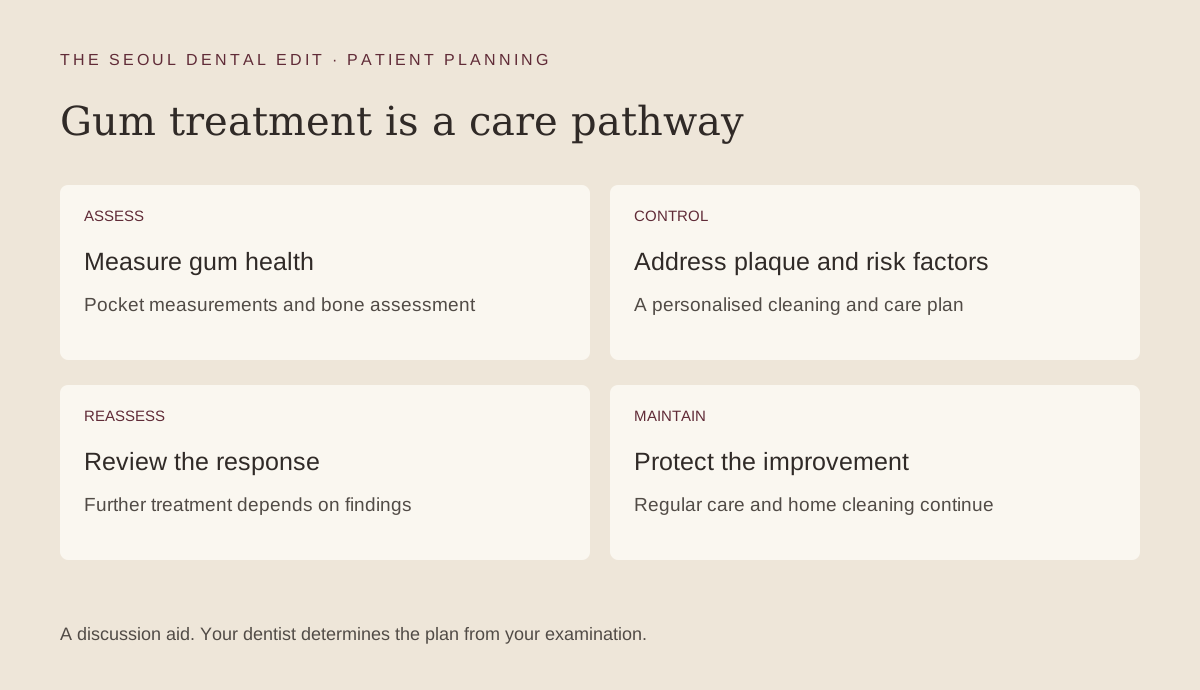
Gum disease treatment in Seoul should begin with a diagnosis, followed by care matched to the damage around your teeth. Some patients need help controlling early inflammation; others need cleaning below the gumline, reassessment and possibly specialist treatment. A booking for “scaling” does not automatically cover that whole pathway. Ask what condition the clinician has found, which teeth are affected and how progress will be checked.
For an international patient, the important planning question is not simply whether the first appointment fits into a trip. It is whether the treatment, healing review and ongoing care fit together after you leave Korea. Use this guide to understand that sequence and prepare useful questions. The examination determines which steps apply to you; an online description or a photograph cannot establish your individual periodontal diagnosis.
References: NIDCR: periodontal gum disease · SDCEP: stepwise periodontal treatment
Gingivitis and periodontitis are different problems
Gingivitis involves inflammation of the gums and can improve with professional care and effective daily cleaning. Periodontitis involves damage to the supporting tissues around teeth. It therefore needs a different conversation about control, remaining support and future monitoring. Gum disease may be relatively quiet, so the absence of pain is not reliable reassurance that everything is healthy.
Bleeding, persistent bad breath, gums pulling back, a change in the bite or teeth becoming loose are reasons to seek an examination. None of these signs tells you the stage by itself. Avoid choosing a treatment solely because your symptoms resemble an online photograph. Ask the dentist to separate what is inflamed now from what reflects earlier loss of support, and to explain the implications in language you understand.
References: AAP: gum disease information
What the first assessment needs to establish
A periodontal assessment may include measurements of the spaces between teeth and gums, bleeding findings, recession, tooth movement and relevant radiographs. Your medical history matters too. Tobacco use and diabetes are among the factors the clinician needs to consider. Bring a medication list and mention previous gum treatment rather than assuming a new clinic can reconstruct the history from one examination.
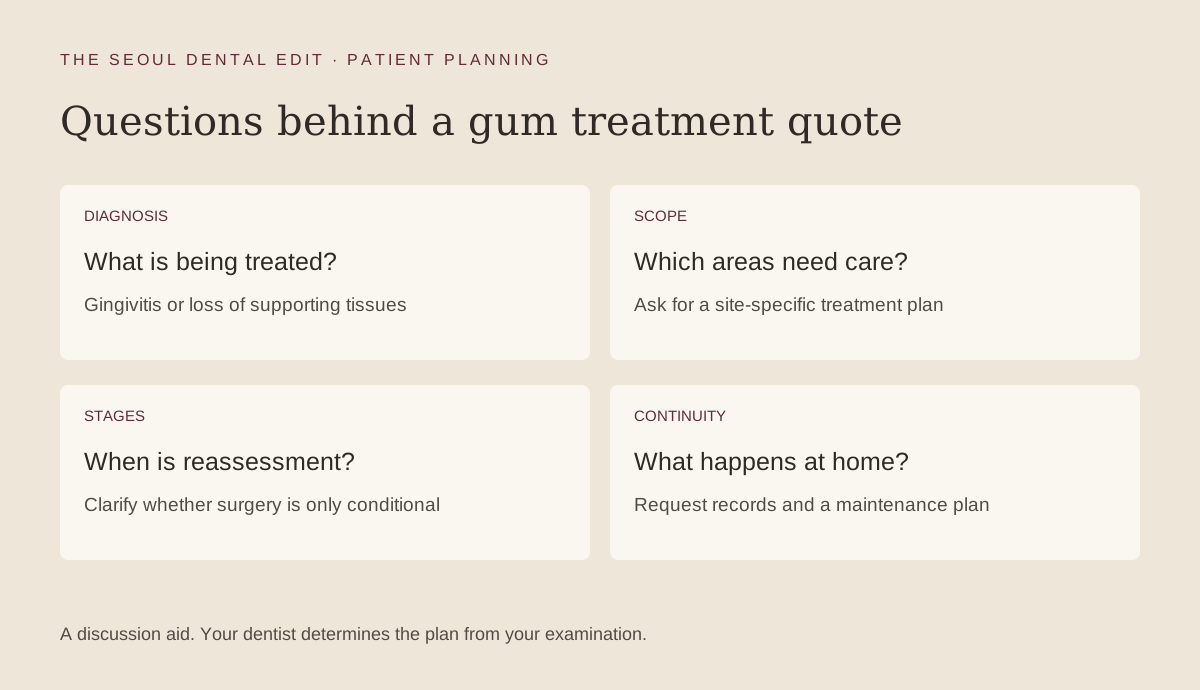
Request a copy of the chart and an explanation of two or three representative areas. Which area is relatively stable? Which needs active treatment? What finding supports that decision? If a tooth is described as having a poor outlook, ask what makes its situation different from the neighbouring teeth. The value of the chart is not that you must interpret every number yourself; it gives you and future clinicians a shared starting point.
References: NIDCR: periodontal gum disease
Why a routine cleaning may not be enough
A routine cleaning and active treatment of periodontal pockets are different services. Scaling and root planing targets deposits around the root surfaces below the gumline. It may form part of nonsurgical periodontal treatment, rather than being an optional cosmetic upgrade. The American Academy of Periodontology notes that nonsurgical care has limits and that some patients need additional treatment when it does not provide adequate control.
Before accepting an estimate, clarify whether it covers selected teeth, several areas or the whole mouth. Ask whether local anaesthetic is planned and how the work will be divided between appointments. Tell the team if you have sensitive teeth, difficulty opening widely or anxiety. These details help organise a manageable visit. They should not be left until treatment is already under way.
References: AAP: nonsurgical treatment
The review is a decision point, not an extra
Periodontal care is usually organised in steps. Initial work on cleaning and risk factors is followed, where needed, by deeper instrumentation. The response is then reassessed. Areas that remain difficult may need further cleaning or specialist evaluation, while a satisfactory response can lead into maintenance. Moving directly from the first treatment to a declaration that everything is finished misses that decision point.
Ask the clinic when reassessment should occur for your condition and which findings it will compare. The interval depends on the starting situation and expected response; it cannot be reduced to one universal travel itinerary. If the review falls after your return flight, identify the dentist who will perform it at home. Obtain the baseline records and agree how the results will inform any further care in Seoul.
References: SDCEP: stepwise periodontal treatment
When surgery enters the discussion
Persistent deeper pockets or areas that are hard to access may lead to a discussion of periodontal surgery. Depending on the defect and objective, surgery can improve access for cleaning, change pocket anatomy or use regenerative techniques in selected areas. These are different purposes. A promise to “grow all the bone back” is not an adequate explanation of what is realistic for your own teeth.
Request the proposed procedure name, the reason for choosing it and the alternatives. Ask what further nonsurgical care could achieve, what surgery adds, and what limitations remain. Also ask about the expected appearance of the gums afterwards, cleaning restrictions, stitches and review visits. If several teeth are recommended for extraction, a reasoned second opinion may help you understand the plan, provided an urgent problem is not left untreated while you compare proposals.
References: EFP: gum disease treatment
Comfort, sensitivity and changes in appearance
Deep cleaning can leave the gums tender and teeth sensitive. The American Dental Association describes temporary pain, swelling, bleeding and sensitivity among possible effects, and recommends a subsequent visit to check healing and pocket measurements. Your experience and the appropriate response depend on the extent of treatment and your oral condition, so obtain individual aftercare instructions rather than relying on a fixed online recovery promise.
Ask which sensations are expected, which should trigger a call and how to keep the treated areas clean. Clarify the instructions before leaving, especially if English is not the usual language of your dental care. Write down the contact route and the name of any prescribed medicine. Do not start leftover antibiotics or add an oral rinse simply because someone else received it after a similar appointment.
References: ADA MouthHealthy: scaling and root planing
Daily care and maintenance protect the investment
Supportive periodontal care is the continuing phase after active treatment. It includes reassessment of health and risk, monitoring of the gums and treatment where needed. The Scottish Dental Clinical Effectiveness Programme recommends selecting recall intervals according to the individual history and risk rather than giving every patient the same schedule. Changes in medical health or smoking status may change that plan.
Make maintenance practical. Show your clinician where interdental cleaning is difficult and ask for a demonstration with an aid that fits. Tell them if hand dexterity, cost or sensitivity makes the routine hard to follow. A written plan you can actually carry out is more useful than a complex list you abandon. If ongoing appointments will take place outside Korea, choose that provider before the Seoul course ends and share the diagnosis, chart and treatment summary.
References: SDCEP: supportive periodontal care
Planning the trip and comparing quotations
Ask for an itemised plan that separates examination, imaging, active treatment, anaesthesia, reassessment and maintenance. A lower headline figure may describe a different service, so compare the scope before comparing totals. If surgery is only a possibility after reassessment, ask how that contingency will be quoted rather than treating it as an already necessary purchase.
For travel planning, write down three dates: your first assessment, the proposed treatment appointments and the review the clinician considers necessary. Then identify which are confirmed and which depend on examination or healing. Keep a separate record of work commitments, return travel and access to care at home. This makes scheduling conflicts visible before you commit.
Request clinical records in a format your home dentist can use, including tooth identifiers and the dates and areas treated. Confirm how to obtain further records if another clinician needs them later. It is also useful to ask whether the estimate includes a written treatment summary and what happens if the final plan changes after diagnosis. These administrative questions make cross-border care easier without substituting for clinical judgement. Keep your own copy of the agreed plan rather than relying entirely on a booking message or verbal estimate.
A listed clinic to consider for a periodontal consultation
New York S Dental Clinic is included here because its official English-language periodontal page specifically describes diagnosis, scaling, root planing and maintenance planning. It is an existing Seoul Dental Edit listing in Jongno, inside Somerset Palace Seoul. That documented service fit and English consultation information are the selection criteria; this is not a ranking or a guarantee of outcome.
Its team page lists Dr. KyungJin Kim as a dental consultant and records internship and residency training in periodontics at Seoul National University Dental Hospital. If you want his input, ask whether it is available for your appointment and how it relates to the dentist providing treatment. Review the clinic profile and official periodontal page linked below, then request a consultation explaining your symptoms, previous gum treatment and travel dates. Ask for the assessment findings and proposed review schedule before committing to a course of care.
References: New York S: English periodontal services · New York S: dentist and consultant biographies
Questions patients often ask
Can I judge gum disease by whether my gums hurt? No. Gum disease can progress without obvious discomfort. Symptoms are a reason to seek assessment, but their absence does not replace an examination. If a previous dentist diagnosed periodontitis, mention that history even when your mouth currently feels comfortable.
Does every patient need surgery? No. Treatment is selected according to the diagnosis and response to initial care. Ask which measured finding makes an additional procedure appropriate. A package name, a photograph or another patient's experience cannot answer that question for you.
Can I finish everything during a short holiday? You may be able to complete some appointments, but the necessary reassessment and maintenance can extend beyond the trip. Before booking, separate the initial treatment from the later review and agree who will provide each. A local follow-up arrangement should be explicit rather than assumed.
What should I do if symptoms become worse while I am comparing clinics? Seek prompt dental advice for very painful or swollen gums, teeth becoming loose, an unexplained mouth lump or persistent red patches or ulcers. Do not wait for an overseas appointment to assess a worsening problem. The NHS identifies these as reasons for urgent dental assessment; use an appropriate local dental service wherever you are.
References: NHS: gum disease · AAP: nonsurgical treatment · AAP: gum disease information · SDCEP: stepwise periodontal treatment
Explore the care and related reading
New York S Dental Clinic profile >
Dr. KyungJin Kim: consultant profile >
Review New York S’s official English periodontal services >
Scaling and root planing explained >
Explore related care in Seoul
These profiles describe published clinical interests and services. Compare the team and ask whether the proposed care fits your diagnosis.
- Origin Dental Clinic — Gangnam
- New York S Dental Clinic — Jongno
- Dr. KyungJin Kim — Dental consultant with a background in periodontal and implant care at New York S Dental Clinic.
- Dr. Jeong-chan Kim — Implant and general dental care at Dongdaemun Dental Clinic.
Clinical references and further reading for the explanations on this page. The guide is general patient education; your dentist determines the plan for your examination findings.
NIDCR: periodontal gum disease >NHS: gum disease >AAP: nonsurgical treatment >AAP: gum disease information >ADA MouthHealthy: scaling and root planing >EFP: gum disease treatment >SDCEP: supportive periodontal care >SDCEP: stepwise periodontal treatment >New York S: English periodontal services >New York S: dentist and consultant biographies >