Quick answer
Wisdom tooth removal in Seoul starts with an examination and appropriate imaging to establish whether extraction is needed and how close the roots are to nerves or the sinus. Recovery and travel planning depend on surgical difficulty, your health and the anaesthetic used. Arrange a postoperative contact and enough flexibility for reassessment before booking around a fixed departure date.
Start with the reason for removal
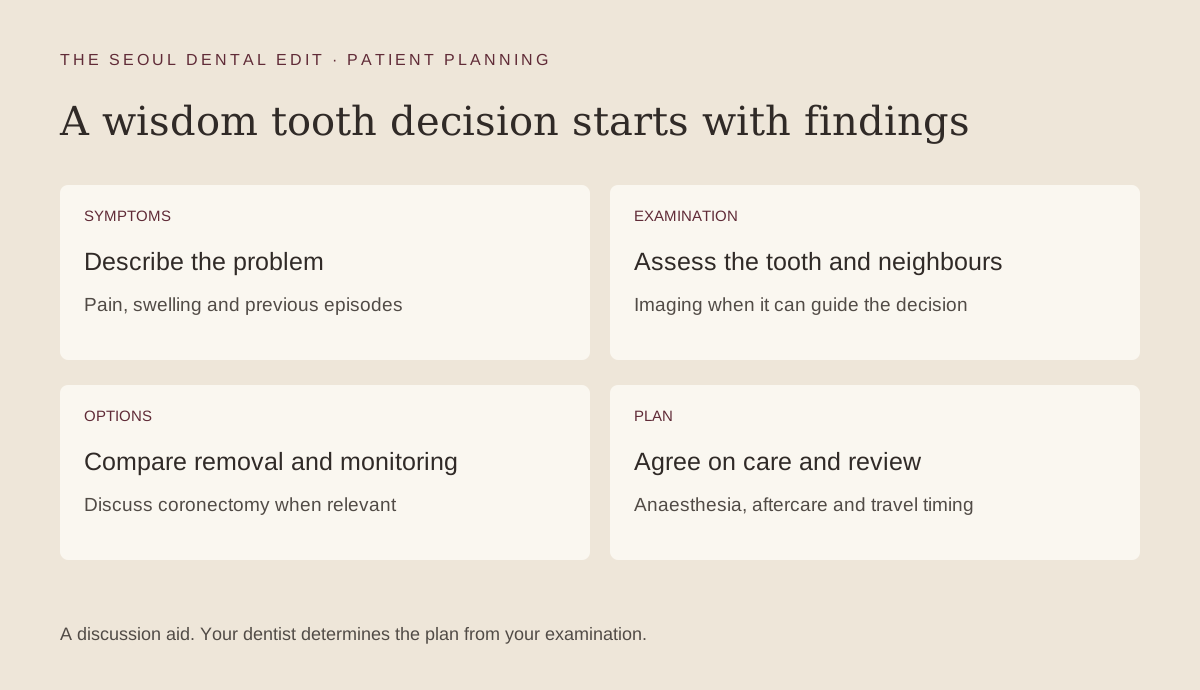
Wisdom tooth removal in Seoul should begin with an assessment of the individual tooth, not a decision to remove every wisdom tooth because you are visiting Korea. Teeth causing repeated infection, unmanageable decay or damage to nearby structures may need treatment. A healthy tooth without a current problem may instead be monitored. The useful first question is: what finding makes surgery appropriate for me?
This guide explains the journey from consultation to follow-up for an international patient. It helps you compare an extraction plan, arrange practical support and understand what to ask before booking. It cannot determine whether your tooth should be removed from symptoms alone. Bring previous images and describe what has happened over time, including episodes that improved before your appointment.
References: NHS: wisdom tooth removal
Understand the diagnosis, including the neighbouring tooth
An impacted wisdom tooth is one that cannot emerge into its normal position. That describes its location, not automatically a need for surgery. Ask the dentist to show you whether the concern is decay, recurrent inflammation of the surrounding gum, a problem behind the next molar, or another finding. Also ask whether the painful area could have a different cause.
NICE guidance for the UK NHS advises against routine removal of disease-free impacted wisdom teeth. It distinguishes a first, non-severe episode of gum inflammation from repeated episodes. This is useful background for discussing observation, but it is not a Korean coverage rule or a substitute for your surgeon’s judgment.
If you choose monitoring, agree what is being watched, who will review it and which changes should bring you back sooner. Keeping a written assessment helps your home dentist understand the starting point. An uneventful month after consultation does not by itself answer the longer-term question.
References: NICE: extraction recommendations
What the examination and images should establish
The consultation should connect your symptoms with the position of the tooth and surrounding structures. Ask to see the relevant image while the clinician explains the plan. You do not need to interpret an X-ray yourself; you need to understand why its findings change the recommendation.
A three-dimensional CBCT scan is not automatically a better first test for every patient. The FDA advises using it when necessary information cannot be obtained through other imaging. CBCT generally involves more radiation than conventional dental X-rays. Bring existing images to help avoid unnecessary duplication and ask what question a proposed scan will answer.
For a lower wisdom tooth, one important question may be how the roots relate to a sensory nerve. For an upper tooth, ask whether the nearby sinus affects planning. Tell the team about previous surgery, difficult anaesthesia, medicines, allergies and relevant medical conditions before the procedure is scheduled. A medication list is more useful than trying to remember names while sitting in the dental chair.
References: FDA: choosing dental CBCT · BAOMS: impacted wisdom teeth
Compare removal, monitoring and coronectomy
Full extraction removes the tooth and its roots. In selected lower wisdom teeth, the surgeon may discuss coronectomy: removing the crown while intentionally retaining roots close to the inferior alveolar nerve. The purpose is to reduce a particular nerve-related risk, not to make surgery risk-free.
Suitability depends on the tooth’s condition. Decay or infection involving the roots can make retaining them inappropriate. Roots can also move later, become symptomatic or need another operation. If they become loose during surgery, the plan may change to full removal. These possibilities belong in the consent discussion before treatment begins.
For a visitor, the follow-up implications matter as much as the initial procedure. Ask how retained roots will be recorded, whether later images are planned and who can assess you after returning home. If you cannot reasonably complete the recommended monitoring, tell the surgeon while comparing options. The final decision should reflect the anatomy and your ability to continue care.
References: UCLH: coronectomy
Know the risks that apply to your operation
Ask for risks to be explained for your tooth rather than relying on a universal percentage from an advertisement. Lower wisdom tooth surgery can affect nerves supplying feeling to the lip, chin or tongue. Altered sensation may be temporary, but lasting changes are possible. Ask which areas could be affected and what the reporting and review process would be.
Other possible problems include bleeding, infection, dry socket and injury to neighbouring structures. A difficult extraction is not necessarily the wrong choice, but it deserves a clear explanation of why its benefits outweigh leaving the tooth in place. Request a specialist opinion if the assessment remains unclear or your dentist recommends referral.
Before agreeing to several extractions together, ask what each tooth needs individually. A single appointment may be convenient, while eating, cleaning and arranging help afterwards can become more demanding. Make the decision around the proposed care and your circumstances, rather than treating a larger package as automatically better value.
References: BAOMS: impacted wisdom teeth
Anaesthesia, communication and the day of treatment
Local anaesthesia numbs the treatment area while you remain awake. Sedation may help with anxiety, and some cases need a different anaesthetic approach or treatment setting. Ask exactly what is proposed: the word “sedation” alone does not tell you how to prepare or what assistance you will need afterwards.
Agree how to signal discomfort or request a pause. Arrange language support for the clinical discussion, consent and discharge instructions, not only the initial booking. A translated appointment message is not the same as being able to discuss an unexpected change during care.
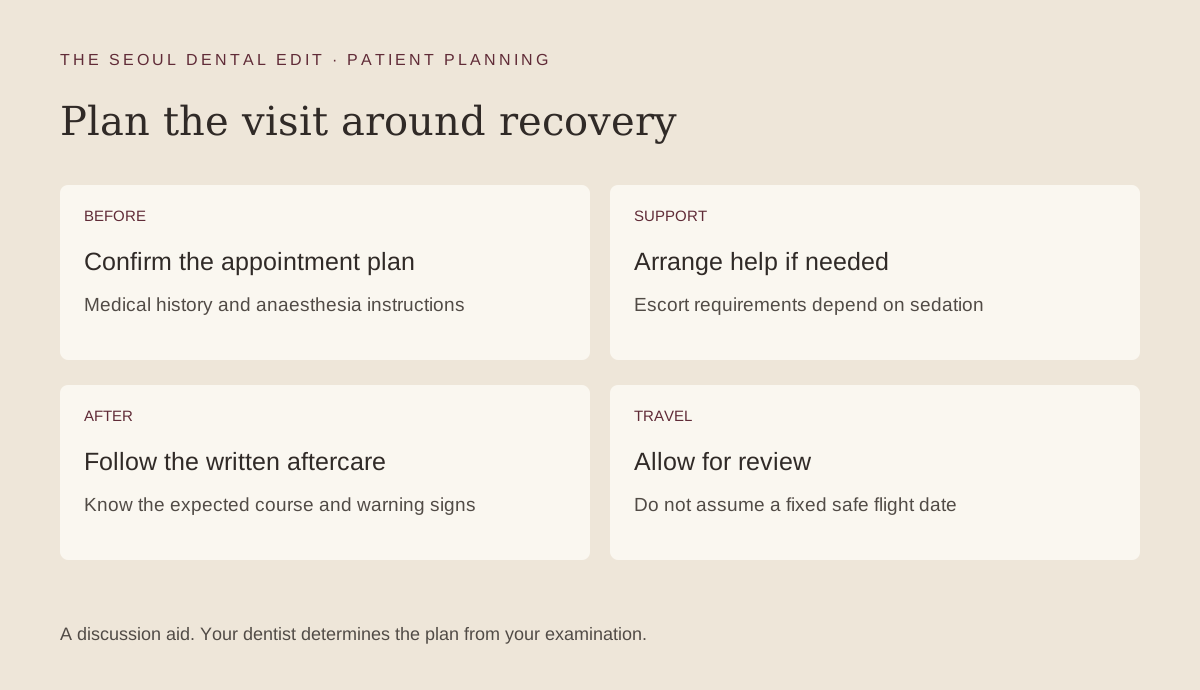
Obtain the clinic’s written rules about eating and drinking beforehand, an escort, driving and activities after the appointment. Follow the instructions for your specific anaesthetic rather than advice intended for another patient. If you are travelling alone, explain that before the clinic confirms the treatment day. Ask whether a responsible adult must remain with you after discharge and arrange suitable help.
References: NHS: wisdom tooth removal · University Hospitals Sussex: wisdom tooth surgery
Protect the healing site and follow your written plan
After extraction, care instructions aim to protect the wound and allow healing. UCLH advises avoiding rinsing, spitting or disturbing the socket during the first 24 hours, then resuming careful cleaning as directed. Your surgeon may adapt instructions to the procedure, so keep the discharge sheet accessible rather than relying on memory.
Choose soft food initially and be careful with hot food while the mouth remains numb. Ask which pain-relief options are suitable with your health history and other medicines. Do not add extra doses or combine products without checking their ingredients. If medicines are prescribed, have the names and instructions written clearly.
Smoking can interfere with healing. Discuss support for avoiding it during recovery before surgery, rather than discovering the restriction afterwards. Check when exercise and other activities can resume. Your care plan should also explain whether stitches dissolve or need a separate appointment; do not assume every clinic uses the same approach.
References: UCLH: extraction aftercare
Plan your stay around review, not only surgery
There is no single itinerary that suits all wisdom tooth operations. One straightforward extraction and several impacted teeth may create very different practical needs. Ask the treating team for an estimate of assessment visits, surgery, planned review and time that should remain available for unexpected care. Treat that as a clinical planning discussion, not a flight-booking guarantee.
Tell the clinic your proposed departure date before paying for a package. Ask who will review you if your usual surgeon is unavailable and how to obtain help outside opening hours. Keep the address and contact route in both a format you can read and one a local driver or helper can use.
Leave room for simple meals, rest and flexible arrangements. If travel dates cannot change, ask whether assessment now and treatment later would be more appropriate. Convenience should not pressure you into accepting a procedure without time to understand it. A hotel reservation close to the clinic is useful only if the overall care plan is suitable.
Recognise when you need help
Ask the clinic to describe the expected direction of recovery and the symptoms that should trigger contact. Pain and swelling can follow surgery, but a new deterioration deserves assessment rather than an assumption that it is normal. Contact the treating team for persistent bleeding, severe or increasing pain, fever or worsening altered sensation.
Difficulty breathing or swallowing and rapidly spreading swelling require emergency assessment. Do not wait for a routine message reply from the clinic in that situation. Keep an emergency plan separate from the ordinary appointment contact.
If you develop a problem after leaving Korea, seek local care when necessary and provide the operative information. An online exchange with the original clinic can support continuity, but it cannot replace an examination when one is needed. Take photographs only if requested and useful; they cannot show every cause of pain or swelling.
References: Ashford and St Peters: coronectomy and warning signs
Compare the whole quotation
Ask for an itemised estimate covering the examination, necessary images, the named procedure, anaesthesia and planned postoperative review. Check whether medicines, dressings, stitch removal and treatment of a complication are included. These are questions to confirm, not assumptions about what any listed clinic charges.
If the surgeon may change from coronectomy to extraction, ask how that would affect both consent and cost. Ask what happens financially if assessment shows that treatment should be postponed or provided in another setting. Avoid comparing prices before checking that both quotations describe the same tooth and procedure.
Your personal budget also includes accommodation, transport, any required escort and possible changes to travel. Request documents your insurer needs before treatment, while recognising that reimbursement depends on the insurer’s policy. This guide does not give a representative Seoul price because a meaningful figure requires a defined clinical plan and a current written quotation.
A listed clinic to consider for surgical assessment
S-Face Dental Clinic is included here because its international website lists wisdom tooth removal and identifies Dr. Gin-Ah Song with oral and maxillofacial surgical care. Her official biography records surgical residency and clinical fellowship training at Seoul National University Dental Hospital. Her published surgical background makes the clinic relevant to a consultation about a difficult or impacted wisdom tooth.
Review the S-Face clinic profile and Dr. Song’s profile, then use the international website to request an assessment. Describe symptoms, previous treatment and travel dates. Ask whether the surgeon will review your particular tooth, what language support is available and which follow-up appointments are expected. The reason for this recommendation is relevant listed surgical care, not a guarantee that extraction is necessary or that this provider is the right match for every case.
References: S-Face: wisdom tooth removal and treating surgeon · S-Face: Dr. Gin-Ah Song
Questions to settle before you leave Seoul
Can I keep a wisdom tooth that does not hurt? Pain is only part of the assessment. Ask whether there is disease or damage and what monitoring would involve if removal is not recommended.
Does a scan mean I need surgery? No. Imaging supplies information for a decision; ask how the findings support observation, removal or another approach.
What records should I request? Obtain the tooth numbers, procedure and date, relevant images, medicines, any retained-root information and instructions for future reviews. Include the clinic’s contact details for your next dentist.
When can I fly? Ask your surgeon after discussing the operation and recovery. This guide cannot provide personal flight clearance. Confirm what should happen if symptoms change before departure and who will continue care at home. Understanding those next steps is part of completing the treatment, even when the operation itself has finished.
References: NICE: extraction recommendations · FDA: choosing dental CBCT · UCLH: coronectomy
Explore the care and related reading
S-Face Dental Clinic profile >
S-Face international website: request a surgical assessment >
Explore related care in Seoul
These profiles describe published clinical interests and services. Compare the team and ask whether the proposed care fits your diagnosis.
- S-Face Dental Clinic — Apgujeong · Gangnam
- Magok Pureunmaeum Dental Clinic — Magok · Gangseo
- Dr. Gin-Ah Song — Oral and maxillofacial surgery at S-Face Dental Clinic.
- Dr. Park Kyung Ran — Oral and maxillofacial surgery background; confirm current appointment availability directly.
Clinical references and further reading for the explanations on this page. The guide is general patient education; your dentist determines the plan for your examination findings.
NHS: wisdom tooth removal >NICE: extraction recommendations >FDA: choosing dental CBCT >BAOMS: impacted wisdom teeth >UCLH: coronectomy >UCLH: extraction aftercare >University Hospitals Sussex: wisdom tooth surgery >Ashford and St Peters: coronectomy and warning signs >S-Face: wisdom tooth removal and treating surgeon >S-Face: Dr. Gin-Ah Song >