Quick answer
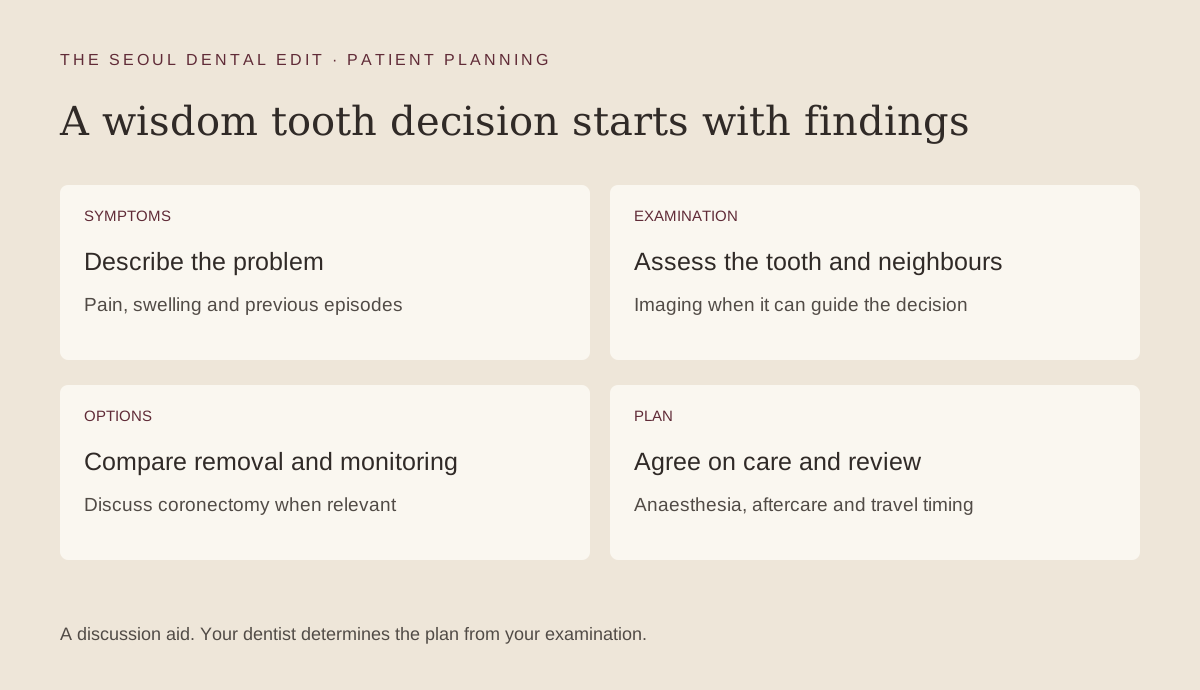
An impacted wisdom tooth does not automatically need removal. Monitoring may be appropriate when examination and imaging show no disease and the tooth is not damaging nearby structures. The decision weighs the chance of future problems against surgical risks. Monitoring is an active plan with review, suitable cleaning advice and clear instructions about symptoms that should trigger an earlier appointment.
Impacted describes position, not a diagnosis
An impacted wisdom tooth has not erupted into a normal position, but that description alone does not tell you whether removal is appropriate. Some teeth cause recurrent inflammation or damage; others may be monitored. The dentist should explain what is currently present and what future concern is plausible in your case. Ask whether there is decay, a pocket behind the neighbouring molar, a cystic change or another specific finding. A recommendation is stronger when based on visible clinical evidence than on a general prediction that all impacted teeth eventually cause trouble.
Symptoms are important but incomplete
Tell the dentist about repeated soreness, swelling, bad taste, food trapping or difficulty opening your mouth. A tooth can also have a relevant problem without obvious pain, so imaging and examination of the adjacent tooth matter. Conversely, pain near a wisdom tooth may have another source. Ask how the clinician linked the symptom to the tooth before agreeing to surgery. If you have had previous episodes, bring records of their frequency and treatment. That history can help distinguish an isolated irritation from a recurring pattern that affects the decision.
Understand what observation involves
Monitoring is an active plan with a review interval and criteria for change, not simply forgetting the tooth. Ask how the area should be cleaned, what symptoms should prompt an earlier visit and whether future imaging is expected. The interval depends on findings and risk rather than a universal schedule. If access for cleaning is poor, discuss how realistic your home care will be. A plan is only useful if you can attend reviews and recognize when the situation has changed, especially if the initial assessment took place abroad.
Balance the risks of each route
Removal has surgical risks and a recovery period; retaining the tooth may carry risks that depend on its position and condition. Ask the surgeon to explain both sides for your anatomy, including any nerve or sinus relationship. Do not rely on another patient's uncomplicated experience as a prediction of your operation. If the recommendation remains uncertain, a specialist opinion may clarify the balance. Where urgent infection is present, timely treatment takes priority; a second opinion should not become a reason to delay necessary acute care.
Make the travel decision separately
A visit to Seoul can be an opportunity for assessment, but convenience alone is not a medical indication for extraction. If monitoring is chosen, obtain the images and written findings for your home dentist. If removal is chosen, allow appropriate time for recovery and review rather than fitting it into the final day of a trip. Ask which future changes would lead to reconsideration so that the decision remains understandable after you leave. Clear records help a later clinician evaluate progression instead of repeating the entire conversation from memory.
Patient questions
Can an impacted tooth cause problems without pain?
Yes. Decay, gum problems or effects on an adjacent tooth may be found during examination or imaging before obvious symptoms develop. Feeling comfortable is one part of the assessment.
What changes should prompt an earlier review?
New pain, swelling, an unpleasant taste, difficulty opening the mouth or repeated inflammation warrant dental advice. Severe or spreading swelling, fever or swallowing difficulty needs urgent assessment.
Explore related care in Seoul
These profiles describe published clinical interests and services. Compare the team and ask whether the proposed care fits your diagnosis.
- S-Face Dental Clinic — Apgujeong · Gangnam
- Magok Pureunmaeum Dental Clinic — Magok · Gangseo
- Dr. Gin-Ah Song — Oral and maxillofacial surgery at S-Face Dental Clinic.
- Dr. Park Kyung Ran — Oral and maxillofacial surgery background; confirm current appointment availability directly.
Clinical references and further reading for the explanations on this page. The guide is general patient education; your dentist determines the plan for your examination findings.
NHS: wisdom tooth removal >