Quick answer
After a tooth extraction, protecting the blood clot is the priority. Follow the dentist’s instructions on pressure for bleeding, food, cleaning and pain relief. Avoid rinsing or spitting during the first 24 hours unless your clinician advises otherwise; gentle cleaning and rinsing usually resume afterward. Seek help for persistent bleeding, worsening pain, spreading swelling or difficulty swallowing or breathing.
Follow the instructions for your procedure
Aftercare depends on whether the extraction was simple or surgical, your medical history and any additional procedure. Ask the team to explain the written instructions before you leave, while you can still clarify unfamiliar terms. If sedation affects your memory, an escort should also receive the information. Confirm how long numbness may affect eating and how to avoid biting the lip or cheek. A generic online timeline cannot replace the surgeon's plan, especially after multiple extractions, grafting or treatment near a nerve or sinus.
Protect the early healing site
The clot and tissues in the socket are part of healing. Follow instructions about pressure for bleeding, rinsing and cleaning, and avoid probing the socket with fingers or objects. Ask when and how to resume normal brushing around the area rather than stopping all oral hygiene. Tobacco use can complicate healing, so discuss cessation and the surgeon's specific advice. If bleeding continues beyond the expected pattern, contact the clinic for guidance. Repeatedly disturbing the area to inspect it can make it harder to judge what is happening.
Arrange eating and daily activity in advance
Choose foods that fit the clinic's instructions and can be eaten comfortably without traumatizing the site. Avoid planning an elaborate meal immediately after surgery. Ask about exercise, alcohol, work and travel because restrictions vary with the procedure and medication. If you are staying in Seoul, ensure you have access to suitable food, transport and help if sedation was used. A quieter schedule can make it easier to follow instructions and notice changes. Recovery should be a planned part of the trip, not time borrowed from a full itinerary.
Watch the direction of change
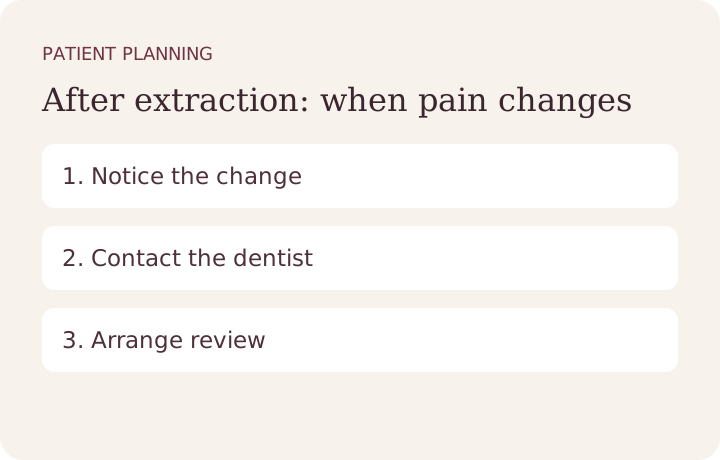
Some discomfort and swelling can occur, but worsening symptoms, significant bleeding, fever or a concerning taste or discharge deserve contact. Severe pain that develops after initial improvement may need assessment for dry socket or another problem. Difficulty swallowing or breathing and rapidly spreading swelling require emergency care. Do not diagnose a complication from the appearance of the socket alone; normal healing can look unfamiliar. Give the clinician the timing, severity and associated symptoms so they can decide whether you need to be seen.
Keep review and handover practical
Find out whether stitches need removal and whether the clinic wants a routine wound check. Before leaving Korea, obtain the procedure details and any special precautions for your home dentist. If you develop a problem after departure, arrange local assessment and share the records rather than waiting indefinitely for remote advice. Keep medicines in their labelled packaging and follow the prescribed plan. The goal of the first few days is protected healing and timely recognition of problems, with enough flexibility to obtain care if recovery differs from the initial expectation.
The first 24 hours and the following day
For the first 24 hours, avoid rinsing or spitting unless your dental team gives a different instruction. Protect the clot and follow the pressure instructions provided if bleeding occurs. Once numbness has worn off, choose comfortable foods and avoid disturbing the socket. From the following day, gentle salt-water rinsing and careful cleaning may be advised; do not vigorously swish or probe the socket. Your surgeon’s instructions take priority when your procedure requires different care.
Patient questions
When can I rinse my mouth after extraction?
Common aftercare advice is to avoid rinsing and spitting for the first 24 hours, then use gentle rinses as instructed. Vigorous rinsing can disturb the clot; follow any procedure-specific instructions.
Is worsening pain several days later normal?
Some discomfort is expected, but pain that becomes markedly worse after initial improvement needs assessment. Dry socket is one possibility, and fever or spreading swelling can suggest infection.
Explore related care in Seoul
These profiles describe published clinical interests and services. Compare the team and ask whether the proposed care fits your diagnosis.
- S-Face Dental Clinic — Apgujeong · Gangnam
- Magok Pureunmaeum Dental Clinic — Magok · Gangseo
- Dr. Gin-Ah Song — Oral and maxillofacial surgery at S-Face Dental Clinic.
- Dr. Park Kyung Ran — Oral and maxillofacial surgery background; confirm current appointment availability directly.
Clinical references and further reading for the explanations on this page. The guide is general patient education; your dentist determines the plan for your examination findings.
Gloucestershire Hospitals: having a tooth removed >East Sussex Healthcare: dry socket >