Quick answer
Root canal treatment in Seoul aims to preserve a tooth whose internal pulp is irreversibly damaged or infected. Treatment cleans and seals the canals, then the tooth needs a suitable final restoration. Appointment count depends on anatomy, infection and complexity. Before travelling, confirm the complete sequence, including any crown, temporary protection, review and arrangements for care after returning home.
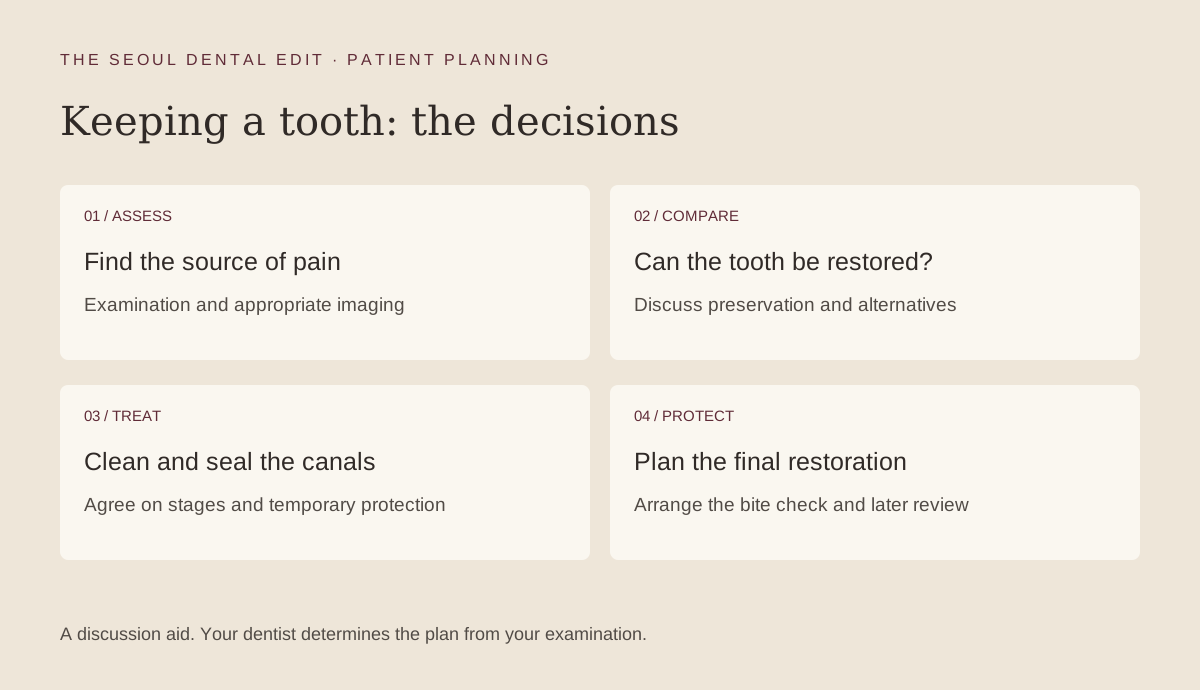
Root canal treatment is a pathway, not just an appointment
Root canal treatment in Seoul can help preserve a tooth whose internal tissue is inflamed or infected, provided the tooth can still be restored and maintained. The useful decision is therefore bigger than whether the nerve needs treatment: you need a diagnosis, a plan for the remaining tooth, and arrangements for follow-up after you leave Korea. A short visit should fit around that clinical sequence.
This guide is for someone considering an initial root canal rather than a repeat procedure. If a tooth has already been root-filled, the retreatment guide addresses the different questions involved. When booking, say whether treatment has started, whether there is a temporary filling, and whether you already have a crown. Those details can change which appointment you need. Ask the clinic to distinguish an assessment from a commitment to begin treatment; sending photographs is useful preparation, but it cannot settle every question about a painful tooth.
References: AAE: root canal treatment
What the dentist needs to establish
The examination should identify the problem tooth and consider whether its pulp, surrounding tissues, or another structure explains your symptoms. Tell the dentist when discomfort began, what triggers it, whether it lingers, and whether biting feels different. Mention any swelling, previous trauma, large filling or recent dental work. Bring earlier radiographs if you have them, including images taken before a crown was fitted.
Ask for the diagnosis in ordinary language. Useful questions include: which findings point to disease inside this tooth, what other explanations were considered, and how will treatment address the cause? A visible cavity and a history of pain do not give you enough information to select a procedure yourself. If the source remains uncertain, ask whether further assessment or referral is appropriate before irreversible work. For an international visit, write down the tooth number and have the clinician point to it on the image so your dentist at home can understand the record.
References: AAE: root canal treatment · NHS: root canal treatment
Preservation, alternatives and realistic limits
Saving a natural tooth is worthwhile when the result is expected to function and can be looked after. Root canal treatment does not repair every fracture or replace missing supporting tissues. Ask separately about the internal treatment and the structural condition of the tooth: would it still support a durable restoration afterwards? A difficult canal and an unrestorable tooth are not the same problem.
Depending on the findings, the discussion may include a different restorative approach, specialist assessment, or extraction. Do not assume an implant is automatically preferable simply because it is new. Equally, a wish to keep every tooth should not prevent an honest explanation of a poor prognosis. Ask what would happen if you deferred treatment, what warning signs would change the urgency, and whether deferral is clinically reasonable. Compare complete pathways, including restoration or replacement and maintenance, rather than comparing an isolated root canal fee with an isolated extraction fee.
References: AAE: saving a natural tooth
What happens during treatment
The usual sequence involves local anaesthetic, access to the internal tooth space, removal of affected pulp, cleaning and shaping the canals, and filling and sealing them. A temporary restoration may be used between visits. Local anaesthetic helps make treatment tolerable, but you should tell the dentist if you feel pain rather than trying to endure it. Agree a hand signal for a pause before treatment begins.
For a patient using a second language, consent should happen while you can ask questions comfortably, before the procedure starts. Request a short explanation of the planned steps and what would make the dentist stop or change the plan. If you have anxiety, difficulty keeping your mouth open, or a history of problems with local anaesthetic, mention this when arranging the appointment. A written list is particularly useful if you tend to forget questions once you are in the dental chair.
References: NHS: root canal treatment
Visits and the meaning of one-day treatment
The number of appointments varies with the tooth, complexity and clinical findings. Avoid booking flights around a guaranteed number taken from an advertisement. Ask whether the quoted schedule includes assessment, internal treatment, a temporary restoration, final restoration and review. A single treatment session does not necessarily mean every part of your care is finished that day.
Marketing language can also describe different procedures under similar names. If a clinic offers a one-day nerve or pulp-preserving treatment, ask exactly what tissue will be treated and what will remain. Do not assume this is interchangeable with conventional root canal treatment. Ask why the proposed approach is appropriate for your diagnosis and what follow-up is needed to judge its outcome. Put the sequence on a calendar before paying for travel: identify confirmed appointments, possible additional visits, and the dentist responsible for each stage. Leave room for a revised plan after the first examination.
References: AAE: root canal treatment · NHS: root canal treatment · Magok Pureunmaeum: published services
The final restoration deserves its own discussion
After canal treatment, the remaining tooth needs a suitable restoration. Depending on its position and condition, the proposed option might be a filling or a restoration providing more coverage. The purpose is to restore function and protect the treated tooth; the choice should follow the examination rather than a blanket rule that every tooth needs the same crown.
Ask whether the restorative dentist is the same person who performs the root canal. If another clinician is involved, confirm how the findings will be shared. A useful written plan names the restoration, its material, the anticipated preparation and the fitting appointment. Check whether an existing crown can be retained or needs replacement. If you must leave with temporary protection, obtain specific instructions and a confirmed handover rather than treating the temporary filling as a completed long-term solution. Ask your home dentist about availability before beginning a treatment sequence that requires completion after travel.
References: AAE: retreatment · New York S: root canal and restoration planning
Recovery and when to call for help
Some tenderness can occur after treatment, but follow the instructions supplied for your tooth rather than a generic timetable. Ask what discomfort is expected, which activities or foods to avoid while protection is temporary, and how to clean the area. Before leaving the clinic, obtain a contact route for unexpected symptoms and clarify what to do outside its normal hours.
Contact the treating dentist promptly for significant swelling, worsening or severe persistent pain, an uneven bite, or loss of a temporary restoration. Do not wait until your departure day to report a problem that may need examination. Difficulty breathing or swallowing, major mouth swelling, or swelling around the eye requires emergency medical assessment. An abscess needs urgent dental care and will not resolve simply because the pain temporarily eases. If symptoms begin before your trip, seek care where you are rather than delaying assessment to reach a preferred overseas clinic.
References: AAE: post-treatment care · NHS: dental abscess
Medication and longer-term review
Antibiotics are not a substitute for treating the dental cause of pain. The American Dental Association advises against routine antibiotic use for most pulpal and related localized pain conditions; a clinician decides whether your circumstances justify them. Report allergies, pregnancy, medical conditions, and every medicine you use. Do not start leftover antibiotics or assume a prescription issued abroad should be continued without review.
Use any recommended pain medicine according to your clinician’s directions and the product label. Ask a pharmacist or dentist to check combinations if you use several products or medicines from different countries. Keep a written record of what you take.
A comfortable tooth still needs ongoing care. A new cavity, damaged restoration or fracture can create later problems, and some teeth require further endodontic treatment. Ask when the tooth should be reviewed and what images or findings will be compared. Symptom improvement and assessment of healing are related but are not identical milestones.
References: ADA: antibiotic stewardship · AAE: retreatment
Compare costs using the same treatment scope
There is no meaningful single price for every root canal in Seoul. Request an itemized estimate based on your examination rather than assuming a published starting price covers your case. Separate assessment, imaging, canal treatment, temporary protection, the final restoration and follow-up. Ask whether removal of an old crown or specialist referral would change the estimate and how you would approve that change.
If insurance matters, check eligibility and required documents with your insurer before treatment; foreign residency or a visitor itinerary does not itself establish coverage. Ask the clinic whether it can provide the receipt, tooth number and treatment description your insurer requests. Keep the financial question separate from the clinical recommendation. If one proposal costs more, ask what additional work it includes before concluding that the plans are equivalent. Finally, understand the clinic’s arrangements for an unplanned review and for care needed after you have returned home.
A listed clinic to consider for a preservation assessment
Magok Pureunmaeum Dental Clinic is included here because its current international website lists conservative dentistry, root canal treatment and retreatment, with an emphasis on retaining natural teeth. The same website identifies Dr. Hyo-jin Park with a conservative dentistry focus. These published services make the clinic relevant to a discussion about whether a damaged tooth can be preserved; they do not establish the prognosis of your tooth or guarantee a particular result.
Review the clinic’s international website and the linked platform profile, then request an assessment explaining your symptoms, previous treatment and travel dates. Ask who will perform the examination and treatment, how many visits may be needed, and whether the final restoration can be completed within your available time. If offered a pulp-preserving option, ask how it differs from complete root canal treatment and why it is being considered in your case. The selection is based on a listed, relevant service rather than an assertion that this clinic is superior to other providers.
References: Magok Pureunmaeum: published services
Before you leave Seoul
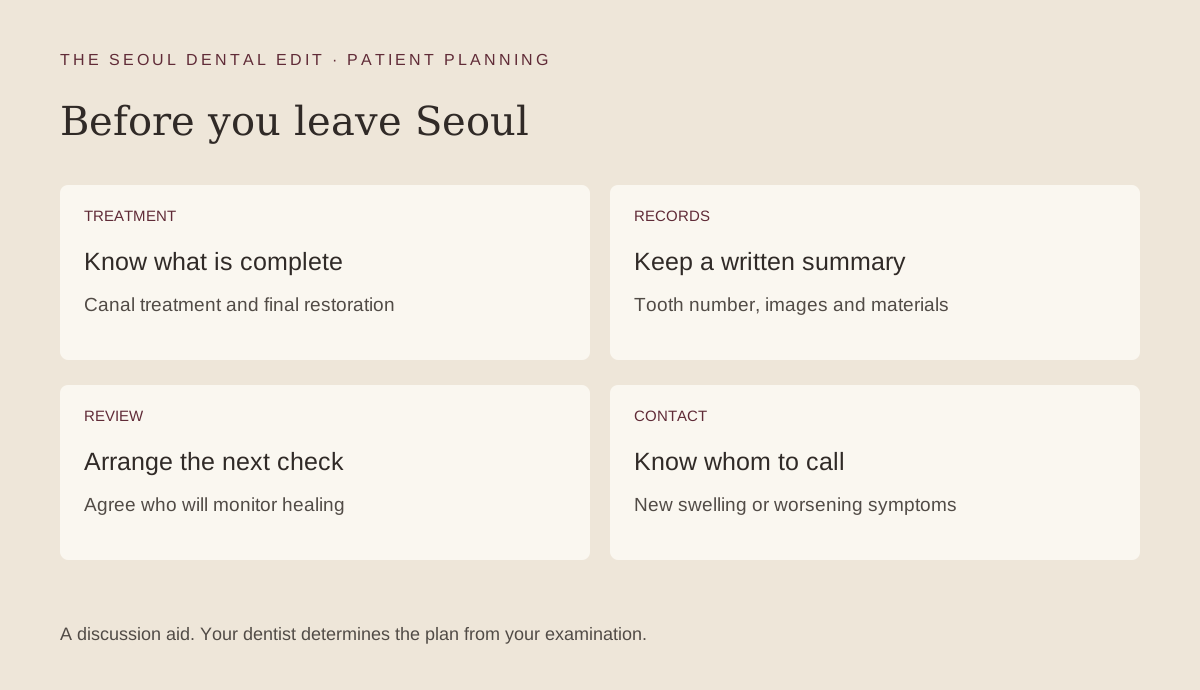
Request copies of the diagnosis, tooth number, treatment dates, relevant radiographs, procedures completed, and the proposed restoration and review schedule. Confirm what is permanent and what remains temporary. Store these records somewhere you can access without relying on a Korean phone number. If your home dentist is taking over, ask what information they need while you can still obtain it from the treating clinic.
Three questions can close the final appointment: what has been completed, what remains to be done, and which changes mean I should seek help? Repeat the answers back in your own words. This simple check can reveal a misunderstanding about a temporary filling, a pending crown or the timing of review. Good planning does not promise that complications will never occur; it makes the next step clear if your recovery or schedule differs from expectations.
Explore the care and related reading
Magok Pureunmaeum clinic profile >
Explore related care in Seoul
These profiles describe published clinical interests and services. Compare the team and ask whether the proposed care fits your diagnosis.
- Lime Tree Dental Hospital — Myeongdong
- Magok Pureunmaeum Dental Clinic — Magok · Gangseo
- Dr. Minji Kang — Conservative dentistry and tooth restoration at Lime Tree Dental Hospital.
- Dr. Park Hyo Jin — Conservative dentistry and aesthetic restoration at Magok Pureunmaeum Dental Clinic.
Clinical references and further reading for the explanations on this page. The guide is general patient education; your dentist determines the plan for your examination findings.
AAE: root canal treatment >NHS: root canal treatment >AAE: post-treatment care >NHS: dental abscess >ADA: antibiotic stewardship >AAE: retreatment >AAE: saving a natural tooth >Magok Pureunmaeum: published services >New York S: root canal and restoration planning >