Quick answer
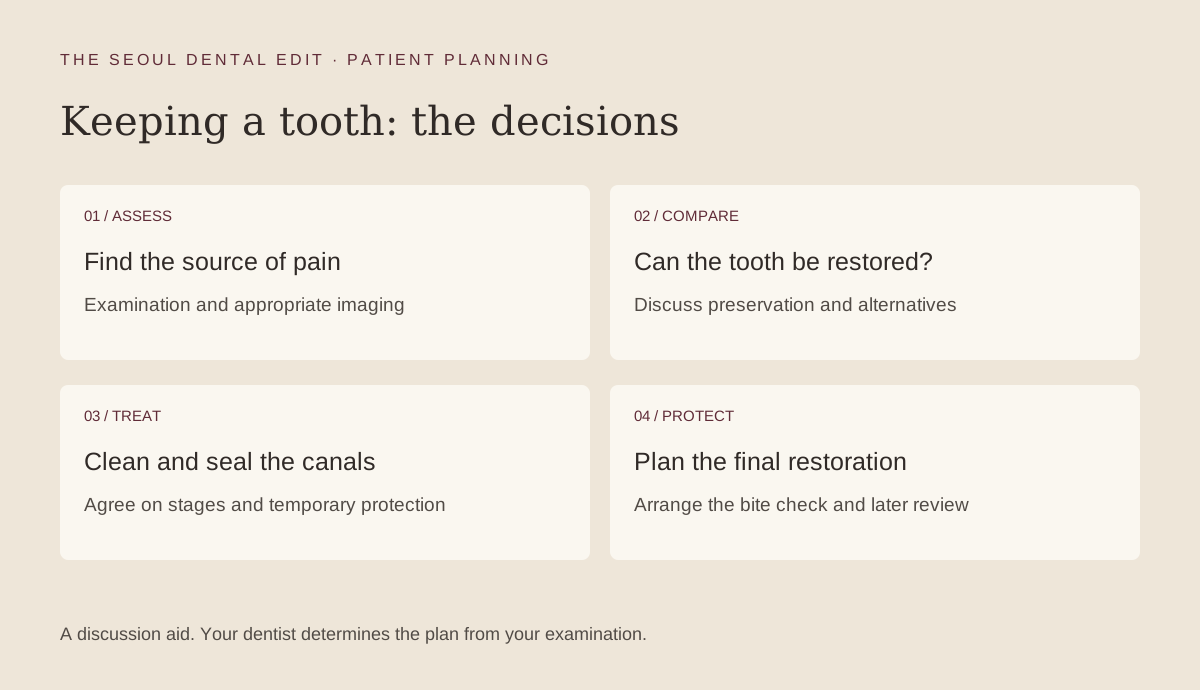
Root canal retreatment may preserve a previously treated tooth when a correctable problem remains inside its canals. The dentist reassesses infection, the existing crown or post, cracks and remaining tooth structure before recommending another procedure. Retreatment, root-end surgery and extraction solve different problems. Ask which cause is suspected, how the proposed treatment addresses it and whether the restoration must be replaced.
A new problem does not identify its cause
Pain or a dark area around a previously treated root does not automatically mean the tooth must be removed. The dentist needs to assess the original treatment, the current restoration, the tooth structure and the surrounding support. Bring earlier images and dates if available; a comparison can help distinguish changes over time from a single snapshot. Explain whether the tooth was ever comfortable, when the new symptoms began and whether a crown or filling has broken, loosened or been replaced since treatment.
What retreatment aims to change
Nonsurgical retreatment re-enters the tooth to address problems within the canal system. Old root filling material may need to be removed, and an existing crown or post can complicate access. The dentist may look for untreated anatomy, improve disinfection or correct a pathway that was not adequately sealed. Ask what specific problem the new procedure is intended to solve. A proposal is more informative when it identifies a plausible cause and explains how treatment will address it rather than describing retreatment as a universal reset.
Restorability remains central
Even technically successful canal work cannot make every damaged tooth a good long-term candidate. A deep fracture, inadequate remaining structure or severe periodontal loss can change the balance. Conversely, the presence of a crown or a previous unsuccessful treatment is not by itself a reason to extract. Ask whether the dentist expects to preserve or replace the existing restoration, whether a post can be removed safely and what findings could make them stop. These contingencies should be discussed before dismantling an expensive restoration.
Compare the complete options
Root-end surgery may be considered when access through the tooth is impractical or a problem near the root tip remains. Extraction may be appropriate when the tooth cannot be predictably restored or maintained. Monitoring may occasionally be recommended when the situation is uncertain and symptoms do not demand immediate intervention. Each option has different costs, risks and follow-up requirements. Ask for a comparison based on your actual tooth rather than general success percentages. A specialist opinion is particularly useful when technical difficulty or uncertainty is high.
Travel and the record handover
Retreatment can require more time than an initial procedure, and a fixed holiday timetable should not dictate the clinical endpoint. Confirm how temporary protection, symptom review and final restoration will be handled. If you return home before radiographic healing can be assessed, request a written follow-up plan with the treating clinician's contact details. Keep both earlier and new images. Report swelling, worsening pain or a broken temporary restoration promptly. Ask in advance who will manage a complication after departure and which services are included in the quoted fee.
Patient questions
Does a painful root-treated tooth always need extraction?
No. The cause may be treatable, but fracture, severe structural damage or poor periodontal support can change the prognosis. An examination and review of previous treatment are needed before choosing preservation or extraction.
Will my existing crown have to be removed for retreatment?
Sometimes. Access through a crown may be possible in some cases, while a crown, post or core may need removal in others. Discuss the access plan, risks and likely restoration costs beforehand.
Explore related care in Seoul
These profiles describe published clinical interests and services. Compare the team and ask whether the proposed care fits your diagnosis.
- Lime Tree Dental Hospital — Myeongdong
- Magok Pureunmaeum Dental Clinic — Magok · Gangseo
- Dr. Minji Kang — Conservative dentistry and tooth restoration at Lime Tree Dental Hospital.
- Dr. Park Hyo Jin — Conservative dentistry and aesthetic restoration at Magok Pureunmaeum Dental Clinic.
Clinical references and further reading for the explanations on this page. The guide is general patient education; your dentist determines the plan for your examination findings.
AAE: endodontic retreatment >AAE: endodontic surgery >