Quick answer
Necessary dental care should not be postponed simply because you are pregnant. Tell the dentist about the pregnancy, medicines and any complications so treatment, imaging and anaesthesia can be selected appropriately. Pain, infection and active disease deserve assessment, while elective cosmetic treatment may be deferred. Coordination with your pregnancy-care team can help when medical circumstances make planning more complex.
The short answer: arrange care, not a long delay
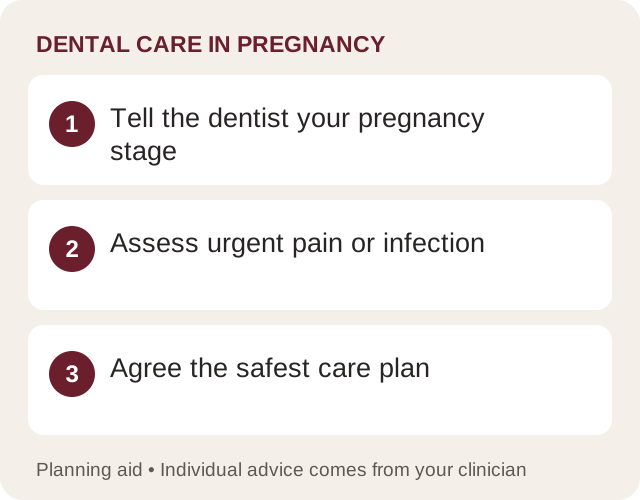
Pregnancy is a reason to tell your dentist about your medical situation, not a reason to ignore a painful tooth. Preventive examinations, necessary dental X-rays, local anaesthetic, fillings and treatment for an infection can be provided during pregnancy when clinically appropriate. The American Dental Association (ADA) and the American College of Obstetricians and Gynecologists agree that urgent dental problems can be treated in any trimester. A decision for you still depends on the diagnosis, stage of pregnancy, medicines, complications and the proposed procedure. Ask the dental team to coordinate with your maternity clinician when the history or treatment calls for it.
If you are visiting Seoul, begin by describing the symptom and your pregnancy rather than booking a cosmetic package. A short examination may establish whether you need urgent treatment, a temporary protective step or a plan that can safely wait. An online guide cannot tell which option is right without an examination. Seeking necessary care early may prevent a small problem becoming a more complex infection. Cosmetic work that can safely be postponed is a separate decision from treatment needed for pain, swelling or a damaged tooth.
References: American Dental Association: Pregnancy · ACOG: Oral Health Care During Pregnancy
Know which symptoms need urgent help
Dental infection can worsen and should not be managed by waiting for a convenient travel date. Ask for an urgent dental assessment for a toothache that persists, gum swelling, a bad taste or pus, pain on biting, or a broken tooth causing increasing pain. Tell the receptionist you are pregnant and describe how quickly the symptoms have changed. A dentist can identify the source and discuss drainage, root canal treatment or extraction where appropriate; antibiotics, when indicated, do not necessarily replace treatment of the source.
Go to the nearest emergency department immediately or call the local emergency number if swelling makes breathing or swallowing difficult, if there is substantial swelling affecting the mouth, eye or neck, or if you are severely unwell. Do not wait for an overseas clinic to reply. For serious pregnancy-related symptoms or concerns, contact your maternity team or emergency services as well. This is a safety guide, not a substitute for local emergency assessment, and an urgent assessment is appropriate even if you are unsure whether the swelling comes from a tooth.
References: NHS: Dental abscess
What changes can happen to the mouth?
Hormonal and behavioural changes can make everyday oral care more difficult. Some pregnant people notice gums that bleed more readily, tenderness or inflammation around plaque. Bleeding does not by itself identify the diagnosis: a dentist can distinguish gingivitis from other gum problems and explain whether professional cleaning or additional periodontal assessment is appropriate. Continue to brush gently at the gumline with fluoride toothpaste rather than stopping because a spot bleeds; seek assessment if bleeding persists or swelling is significant.
Nausea, vomiting, reflux, frequent snacks, dry mouth or a change in brushing tolerance may alter exposure of teeth to acid and sugar. These factors differ greatly between people. A dentist can look for early decay or erosion and suggest achievable changes without assuming that pregnancy automatically damages teeth. A new lump, persistent ulcer or area that changes should be examined instead of being labelled a normal pregnancy change online. Photographing a change and noting when it appeared may help the clinician, but it does not replace an examination.
References: American Dental Association: Pregnancy · ACOG: Oral Health Care During Pregnancy
What to tell the dentist before treatment
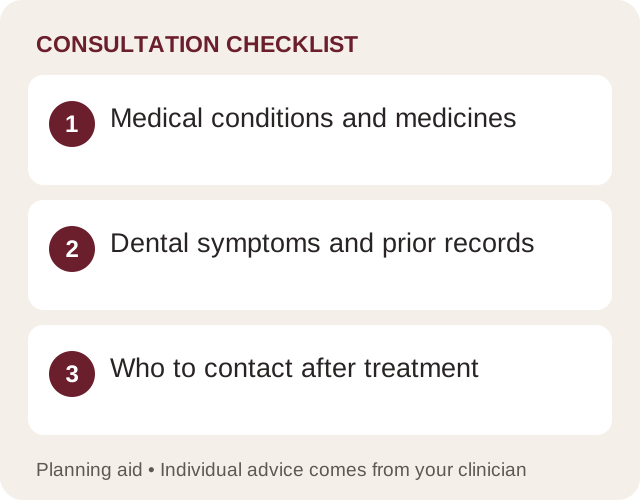
Share the approximate stage of pregnancy, due date if known, and a way to contact your maternity team when necessary. Mention pregnancy complications, severe nausea, reflux, a history of fainting, allergies and any medical conditions relevant to treatment. Bring an up-to-date list of prescribed and over-the-counter medicines, vitamins and supplements, including the dose if known. Tell the dentist if you may be pregnant even if you have not yet had your first maternity appointment.
Describe the dental problem separately: when it started, whether pain is spontaneous or triggered, whether the face or gum has swollen, any fever, what has already been tried, and whether chewing or sleep is affected. Bring previous images or a dentist’s letter if available. A previous X-ray can be helpful but does not automatically replace a new image when the situation has changed. Ask for an interpreter or written explanation if the language of consent is not comfortable for you. You should understand the diagnosis, proposed intervention and alternatives before agreeing.
References: American Dental Association: Pregnancy · ACOG: Oral Health Care During Pregnancy
Examination, cleaning and the timing of treatment
A routine examination can include questions, visual inspection, gum measurements when needed and a discussion about home care. A professional clean may be recommended when plaque or calculus is contributing to gum inflammation. Ask what the dentist found and whether the problem needs a second visit. Tell the team if a reclining chair worsens nausea, dizziness or back discomfort. Shorter appointments, breaks and an adjusted position may be discussed; the dental team should adapt the visit to how you feel and to advice from your maternity clinician where needed.
There is no universal rule that all dental treatment must wait until a particular trimester. Necessary care may be given at any stage after individual assessment. For elective cosmetic treatment, discuss the value of postponing, particularly if it involves medication, multiple appointments or uncertain aftercare. The distinction is urgency and clinical benefit, not a promise that every elective procedure is appropriate now. If the plan is to wait, request a clear review date and an explanation of symptoms that should prompt earlier care.
References: American Dental Association: Pregnancy · ACOG: Oral Health Care During Pregnancy
Dental X-rays: ask why an image is needed
A dental X-ray can help locate decay between teeth, evaluate a root or identify a problem that is not visible in the mouth. The ADA describes dental radiographs as safe during pregnancy when needed, and Guy’s and St Thomas’ NHS guidance notes that a dental X-ray beam is not directed at the developing baby. Inform the dentist that you are pregnant so the need for imaging and the proposed examination can be considered in context. An image should have a diagnostic purpose rather than be taken automatically just because it is available.
Ask: What question will this image answer? Could an existing recent image answer it? Would waiting change the ability to diagnose or treat the problem? The dentist can explain the intended image and local radiation-safety practice. Recommendations on routine protective shielding have changed and may vary by jurisdiction or facility; follow the treating team’s current local protocol rather than assuming a particular apron policy establishes the safety of an image. Do not decline an urgently indicated assessment solely on the belief that every dental X-ray is forbidden in pregnancy.
References: American Dental Association: Pregnancy · Guy’s and St Thomas’: Dental X-rays
Local anaesthetic, sedation and comfort
A local anaesthetic numbs the treatment area while you remain awake. The ADA says local anaesthetics may be used in pregnancy, including commonly used preparations containing epinephrine, when appropriate to the individual. Tell the dentist about reactions to medicines, cardiovascular conditions and advice from your maternity clinician. Ask which medicine is proposed, why it is suitable, what the alternatives are, and how discomfort will be monitored. A past unpleasant injection does not necessarily mean that every local anaesthetic is unsuitable, but it deserves discussion.
Sedation is a different issue from local numbing. Do not assume that laughing gas, intravenous sedation or general anaesthesia has the same risk profile or is needed for routine treatment. The ADA recommends pregnant patients avoid nitrous oxide exposure. For any proposed sedation, ask whether it is necessary, who will administer and monitor it, what alternatives exist, and whether consultation with your obstetric clinician is needed. If treatment is urgent, the dental and medical teams can weigh the risks of the untreated problem against the proposed approach. Never stop prescribed medicines or change a treatment plan on your own.
References: American Dental Association: Pregnancy · ACOG: Oral Health Care During Pregnancy
Medicines: make a coordinated plan
Ask the treating clinician and your maternity team which pain relief, antibiotic or other medicine is appropriate for you, including the dose and duration if a prescription is required. The answer depends on the drug, your medical history, pregnancy stage and the diagnosis. A medicine that was suitable for another person, or for you before pregnancy, is not automatically suitable now. Avoid relying on a translated product name alone: show the active ingredient and strength where possible. Ask what to do if pain or swelling worsens despite the plan.
If antibiotics are recommended, ask why they are needed and how the underlying dental source will be addressed. They may be important in selected infections but are not a universal replacement for drainage or definitive dental treatment. Do not begin leftover antibiotics, increase a dose or discontinue a prescribed course without speaking to the prescriber. If you develop a suspected serious allergic reaction, breathing difficulty or throat swelling, seek emergency help. For breastfeeding or medicines after delivery, ask the care team for advice specific to the drug and the infant.
References: American Dental Association: Pregnancy · ACOG: Oral Health Care During Pregnancy
Nausea, reflux and daily brushing
If brushing triggers nausea, try a small-headed soft brush and choose a time of day when you tolerate it better. Keep brushing twice daily with fluoride toothpaste and clean between teeth in a way your dentist recommends. If toothpaste flavour is the main trigger, ask about alternatives rather than abandoning fluoride care. Gentle, consistent cleaning is more useful than scrubbing harder; a dental professional can demonstrate a technique around sore gums.
After vomiting or reflux, rinse the mouth with water and ask your clinician about a suitable neutralising rinse. ACOG describes a baking-soda rinse as one option after vomiting; ask your clinician whether it is appropriate for you rather than treating a home recipe as essential. Avoid immediately brushing an acid-softened surface; ask your dentist about an appropriate interval. If vomiting is severe, you cannot keep fluids down or you are concerned about dehydration, contact your maternity team promptly. Dental tips do not treat hyperemesis or replace pregnancy care.
References: American Dental Association: Pregnancy · ACOG: Oral Health Care During Pregnancy
If you are travelling to Seoul
Before booking, check that the clinic can explain the examination, consent and follow-up in a language you understand, and ask how to contact the team after hours. Send only the information the clinic needs through its approved secure channel. A useful written plan distinguishes the examination and imaging fee from proposed treatment, identifies what is urgent, and states whether additional visits are likely. Confirm availability rather than assuming that a particular clinician, interpretation service or procedure is guaranteed on your travel dates.
Ask how the plan fits your pregnancy-related appointments and return journey. If a problem needs multiple stages, discuss what can be completed in Seoul and what a dentist at home would need to continue care. Request copies of the assessment, images where available, medicines administered or prescribed, and a clear discharge summary. Check travel insurance and coverage directly with the insurer; coverage, exclusions and reimbursement vary. A low initial quote is not a diagnosis and does not replace a plan for complications or later visits.
References: American Dental Association: Pregnancy · ACOG: Oral Health Care During Pregnancy
A relevant clinic option
S-Face Dental Clinic is listed on this platform and its international website describes general dental treatment, including cavity treatment and sedation services. That published service information makes it a possible place to ask about a general dental assessment in Seoul; it does not establish that every pregnancy-related treatment or sedation option is suitable or available. Confirm that the clinic can assess your particular problem, communicate with your maternity clinician when appropriate, and provide instructions in a language you understand.
Review the S-Face profile and its international website before arranging a consultation. Tell the team that you are pregnant, describe the symptom, and ask which records they need. If you have severe facial swelling or breathing or swallowing difficulty, emergency care comes first rather than waiting for any clinic appointment. This is one relevant listed option, not a ranking, guarantee, or a substitute for choosing a dentist and medical team suited to your situation.
References: S-Face Dental Clinic international website
Questions to take to your appointment
What diagnosis explains my symptoms, and what other causes are being considered? Is an image necessary today, and what decision will it change? Which treatment is needed now and which can reasonably wait? What is the consequence of waiting, and what symptoms should prompt a sooner review? If a filling, root canal or extraction is proposed, ask how the dentist reached that recommendation and whether another reasonable option exists.
What local anaesthetic and medicines are proposed, and should the dentist consult my maternity clinician first? Is any sedation actually necessary? Can the team adjust my position, schedule breaks and explain each step? Will the written estimate identify examination, imaging, treatment, prescriptions and follow-up separately? If I leave Seoul before the plan is finished, who will provide records and how will a dentist at home manage the next stage? These questions are designed to support a shared decision, not to delay urgent treatment.
References: American Dental Association: Pregnancy · ACOG: Oral Health Care During Pregnancy
After treatment and when to seek reassessment
Before leaving, ask for written instructions covering expected discomfort, food and cleaning, medicines, the date of review and a contact number. Ask which signs are expected and which mean the team should reassess you. Some treatments require a temporary dressing or a later permanent restoration; confirm who is responsible for the next step and the consequences of missing it. Record the name of any medicine and the timing of its last dose so you can accurately tell another clinician if you need help elsewhere.
Pain that is worsening, renewed swelling, fever or an inability to function normally deserves prompt professional advice rather than an assumption that recovery is always linear. Breathing or swallowing difficulty, swelling affecting the eye or neck, or severe systemic illness warrants immediate emergency assessment. Contact your maternity team for pregnancy-specific symptoms or concerns. Arrange a dental follow-up after returning home if advised, especially if a temporary measure was used. If symptoms resolve, keep the agreed review rather than assuming the underlying cause has disappeared.
References: NHS: Dental abscess
Quick answers for common decisions
Can I have a necessary filling or root canal while pregnant? The ADA and ACOG say conditions needing treatment can be managed during pregnancy, including fillings, root canals and extractions. The dentist and maternity team should tailor the timing, medicine and technique to your health. The label “necessary” follows an examination; it should not be used to pressure you into an unexamined cosmetic plan.
Should I delay a check-up until after birth? Routine dental assessment is generally encouraged, and a visit can help address bleeding gums, decay or pain early. If you feel unwell or have a pregnancy complication, discuss how to make the appointment safe and comfortable with both teams. Are all Seoul clinics equipped for every pregnancy-related situation? No individual clinic’s availability or experience should be assumed. Ask directly, and use hospital emergency care for serious symptoms. Can a guide approve my treatment? No. This guide helps you prepare questions; your dentist and maternity clinician must advise you for your own circumstances.
References: American Dental Association: Pregnancy · ACOG: Oral Health Care During Pregnancy
Explore the care and related reading
Explore the listed clinic profile — S-Face Dental Clinic >
Explore the clinic’s international website — S-Face Dental Clinic >
Explore related care in Seoul
These profiles describe published clinical interests and services. Compare the team and ask whether the proposed care fits your diagnosis.
- OnO Dental Clinic — Sinsa · Gangnam
- Dr. Se Hong Oh — Bite function, jaw-joint care and orthodontic treatment at OnO Dental Clinic.
Clinical references and further reading for the explanations on this page. The guide is general patient education; your dentist determines the plan for your examination findings.
American Dental Association: Pregnancy >ACOG: Oral Health Care During Pregnancy >NHS: Dental abscess >Guy’s and St Thomas’: Dental X-rays >S-Face Dental Clinic international website >