Quick answer
Dry mouth can result from medicines, health conditions or other factors and increases the risk of decay and oral discomfort because saliva helps protect the mouth. It is not simply an inevitable part of ageing. A dentist can assess the consequences and help identify possible causes, while treatment may include practical moisture measures, stronger prevention and coordination with your medical clinician.
Why a dry mouth deserves an assessment
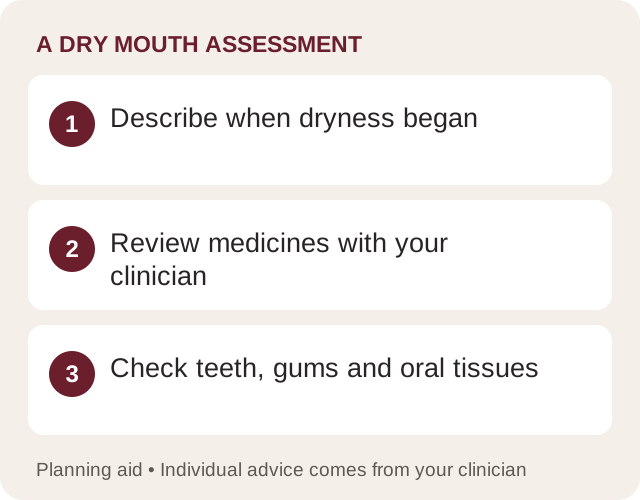
Dry mouth means the mouth feels unusually dry, sticky or uncomfortable. Clinicians may use the word xerostomia for the sensation. It is not a diagnosis on its own: a person can feel dry for several reasons, and the amount of saliva available may vary during the day. A short episode during a flight, an anxious appointment or an illness may improve when the trigger settles. Dryness that persists, disrupts eating or speaking, or is accompanied by other symptoms deserves an assessment rather than a succession of products chosen by guesswork. Saliva makes speaking and swallowing easier and helps protect teeth. When protection falls, decay, soreness and oral infections can become more likely. A dentist can examine the mouth and the risk to teeth, while a medical clinician may need to investigate medicines or a possible underlying condition.
References: Dry mouth · Dry mouth patient guidance
Start with the pattern, not a single diagnosis
Notice when the feeling started, whether it is present on waking or throughout the day, and whether it changes with meals, sleep, illness or medication changes. Some people describe thick or stringy saliva, cracked lips, trouble wearing a denture, altered taste, a burning feeling or difficulty swallowing dry food. These experiences are worth recording, but none proves a particular cause. Mouth breathing during sleep can make morning symptoms more noticeable; a blocked nose or snoring history may be relevant. Dehydration, anxiety and many medicines can also contribute. A sudden uncomfortable change does not mean a serious disease is certain. Equally, a long-standing symptom should not be dismissed simply because water brings temporary relief. If you have dry eyes, frequent urination, recurrent mouth soreness or other new symptoms, share them so the assessment can consider the whole picture.
References: Dry mouth · Dry mouth patient guidance
Medicines and other possible contributors
Prescription medicines, non-prescription products and supplements can matter. Antihistamines, some antidepressants and diuretics are examples of medicines associated with dryness; the full list is much wider, and the right interpretation depends on the person and dose. Bring a complete list rather than trying to identify one medicine by yourself. Do not stop or change a prescribed medicine because your mouth feels dry: ask the prescriber whether a change, dose adjustment or alternative is appropriate. Conditions such as diabetes or Sjögren’s disease can sometimes be involved. Cancer treatment, including head and neck radiotherapy, can affect salivary glands; prior treatment details help the team understand your risk. Oral thrush can cause a sore mouth and may need specific diagnosis and treatment. Several factors can coexist, so the goal is to investigate sensibly rather than assume the first plausible explanation is the only one.
References: Dry mouth · Dry mouth patient guidance
When to seek help sooner
Arrange a dental or medical appointment if dryness persists despite simple measures, makes it difficult to eat or speak, causes ongoing taste changes, or is accompanied by a painful, red, swollen or bleeding mouth, sore white patches, dry eyes or frequent urination. Tell the clinician if you think a medicine may be involved. Seek immediate local emergency care for severe swelling that affects breathing or swallowing, or for rapidly worsening facial swelling with systemic illness. These symptoms are not routine dry-mouth discomfort and should not wait for an overseas appointment. Pain, a broken tooth or a suspected dental infection also deserves timely assessment. The appropriate urgency depends on the symptoms and local services; when in doubt, contact a clinician or urgent-care service where you are, rather than waiting until you return home.
References: Dry mouth · Dry mouth patient guidance
What happens at the consultation
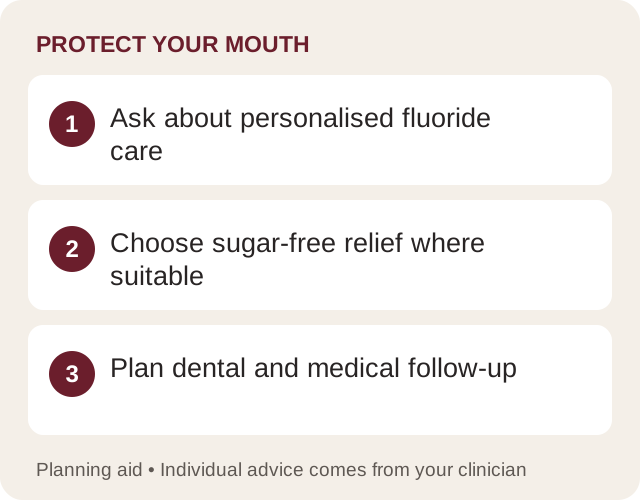
The clinician will usually begin with your history and an examination. Expect questions about timing, fluids, medicines, general health, sleep, nasal breathing, previous head and neck treatment and how the problem affects meals or speech. They may examine the teeth, gums, tongue, cheeks, palate, lips and denture fit. The appearance and amount of saliva, signs of decay and any sore or white areas help guide the next step. Depending on the findings, the dentist may suggest a review with your GP or another clinician, or further tests tailored to your history. A dental X-ray may be useful to investigate tooth disease when clinically justified, but an image does not explain every cause of dryness. Ask what each examination can answer, which findings remain uncertain and whether a symptom needs a separate medical evaluation.
References: Dry mouth · Dry mouth patient guidance
Protecting teeth when saliva is reduced
A dry mouth can change the balance that normally helps protect enamel. The dental team can assess decay risk and recommend a prevention plan suited to your teeth, restorations, ability to clean and medical history. Brush twice daily with fluoride toothpaste and clean between teeth using an approach your dentist recommends. Ask whether an additional fluoride product or more frequent review is appropriate for you rather than assuming everyone needs the same prescription. Frequent sugar exposure matters, including sweets or drinks used to relieve dryness. Choose sugar-free options where suitable, and ask about products that will not add acidity. Record any new sensitivity, rough area, broken restoration or change around a crown. If you wear dentures, clean and store them according to the dental team’s instructions; a dry mouth may change comfort and retention, so a painful denture warrants review rather than repeated self-adjustment.
References: Dry mouth · Dry mouth patient guidance
Comfort measures while the cause is assessed
Small, frequent sips of water can help some people, and keeping water available overnight may be useful if it is safe for your personal fluid plan. Ice chips, sugar-free gum or sugar-free lozenges may stimulate comfort for some people who can use them safely. Avoid choking risks and ask a clinician if chewing is unsuitable. Alcohol, smoking, excess caffeine and acidic, spicy, salty or sugary foods and drinks may worsen symptoms or dental risk for some readers. Alcohol-free mouthwash may be more comfortable. A pharmacist can discuss saliva gels, sprays and other products, but product suitability varies: do not assume an acidic artificial-saliva product is a good choice for natural teeth. A short symptom diary can help you tell whether a measure actually helps. Comfort products are supportive care; they do not replace an assessment of persistent symptoms or treatment of the cause.
References: Dry mouth · Dry mouth patient guidance
If eating, sleep or dentures are affected
Dry food may become difficult to chew or swallow, and talking for long periods can feel tiring. Discuss persistent swallowing problems with a clinician rather than relying on water to push food down. Ask for dietary support if you are struggling to eat enough or losing weight unintentionally. If dryness is worst at night, describe mouth breathing, nasal blockage, sleep problems and whether you wake frequently to drink; a dentist may recommend medical evaluation of nasal or sleep-related factors. For removable dentures, bring the denture and any cleaning products to the appointment. Check the tissues underneath for soreness with the dental team, and follow their advice about overnight removal. A fitted restoration or appliance may need adjustment, but a change in fit does not by itself explain the cause of dry mouth.
References: Dry mouth · Dry mouth patient guidance
Planning a dental visit in Seoul
If you are travelling, book an assessment early enough to discuss findings and decide whether further evaluation or review is needed. Before the appointment, ask whether an English-language consultation is available, whether the clinic can examine existing restorations and dentures, and how you can receive a written summary. Bring your medication list with doses, relevant medical conditions, allergies, prior dental images when available, the dates of cancer treatment if relevant, and the name of your usual dentist or medical clinician. Keep medication in its original packaging when practical and check travel rules with the appropriate authorities. A short trip may be suitable for an initial examination and prevention advice, but it may not allow the time needed to investigate a systemic cause or complete complex treatment. Do not defer urgent symptoms to fit a holiday schedule.
References: Dry mouth · Dry mouth patient guidance
Questions that make the appointment more useful
Ask the dentist what they found on examination and which findings suggest a higher risk of decay or gum problems. Which causes can the dentist assess, and which require a medical clinician? Are there signs of oral thrush or another problem needing specific treatment? What brushing, interdental cleaning and fluoride plan fits your teeth and restorations? Which saliva substitute or moisturising product is suitable, especially if you have natural teeth? If a medication is suspected, who should contact the prescriber? Ask for the proposed steps and alternatives in writing, including the scope of any imaging, treatment and follow-up. If the clinician recommends several appointments, ask what can safely wait, what would change that advice and what your home clinician will need to know.
References: Dry mouth · Dry mouth patient guidance
A listed clinic to consider
S-Face Dental Clinic is listed on this platform and describes general dental examinations, assessment of symptoms such as pain and sensitivity, restorative treatment and periodontal care on its international website. Those services can be relevant when dryness has affected teeth or gums and you need an initial dental examination in Seoul. The published service description does not establish a dedicated dry-mouth clinic or a diagnosis for you. Review the clinic profile and its international general-dentistry service, then ask whether the team can assess your particular concern, communicate in your preferred language, and provide a written report for your usual clinician. If your symptoms suggest a medical cause, confirm how the clinic would coordinate referral. A listing is an option to investigate, not a guarantee of availability, suitability or outcome.
References: S-Face general dental treatment
After the visit and once home
Before leaving, ask for a concise record of the examination, any images and reports, the treatment performed, the clinician’s diagnosis or working impression, product advice and the recommended review interval. If further investigations are suggested, ask which clinician should arrange them and whether you should seek care before travelling. Make a plan for what to do if symptoms worsen during the journey and carry contact details for both the Seoul clinic and your usual local provider. Seek local care for urgent symptoms rather than relying on a remote reply. At home, share the written summary with your dentist and, if appropriate, your medical clinician. A follow-up is useful when the initial examination did not identify one clear cause: treatment can be adjusted after symptoms, medicines and oral findings are reassessed.
References: Dry mouth · Dry mouth patient guidance
Frequently asked questions
Does drinking water cure dry mouth? Water can relieve discomfort and may help when dehydration is involved, but persistent dryness has several possible causes and may need a dental or medical assessment. Is every dry mouth caused by a medicine? No. Medicines are one possible contributor among dehydration, mouth breathing, anxiety, treatment effects and certain health conditions. Do not stop a prescribed drug without speaking to its prescriber. Can a dry mouth increase the chance of tooth decay? It can increase risk because saliva helps protect teeth; a tailored fluoride and cleaning plan is worth discussing. Should I get treatment in Seoul before investigating at home? A Seoul dentist can examine your mouth, but unexplained persistent dryness may require medical follow-up and continuity beyond a short visit. Seek immediate local emergency care if swelling threatens breathing or swallowing.
References: Dry mouth · Dry mouth patient guidance
Explore the care and related reading
Explore the listed clinic profile — S-Face Dental Clinic >
Explore the clinic’s international website — S-Face Dental Clinic >
Explore related care in Seoul
These profiles describe published clinical interests and services. Compare the team and ask whether the proposed care fits your diagnosis.
- OnO Dental Clinic — Sinsa · Gangnam
- Dr. Se Hong Oh — Bite function, jaw-joint care and orthodontic treatment at OnO Dental Clinic.
Clinical references and further reading for the explanations on this page. The guide is general patient education; your dentist determines the plan for your examination findings.
Dry mouth >Dry mouth patient guidance >Dry mouth >S-Face general dental treatment >