Quick answer
An apicoectomy is surgery around the end of a tooth root to manage persistent disease when treatment through the tooth is unsuitable or has not resolved the problem. The surgeon accesses the root through the gum, treats the affected area and closes the wound. Suitability depends on the cause, nearby anatomy and whether the tooth remains restorable and maintainable.
Why approach the root from the outside?
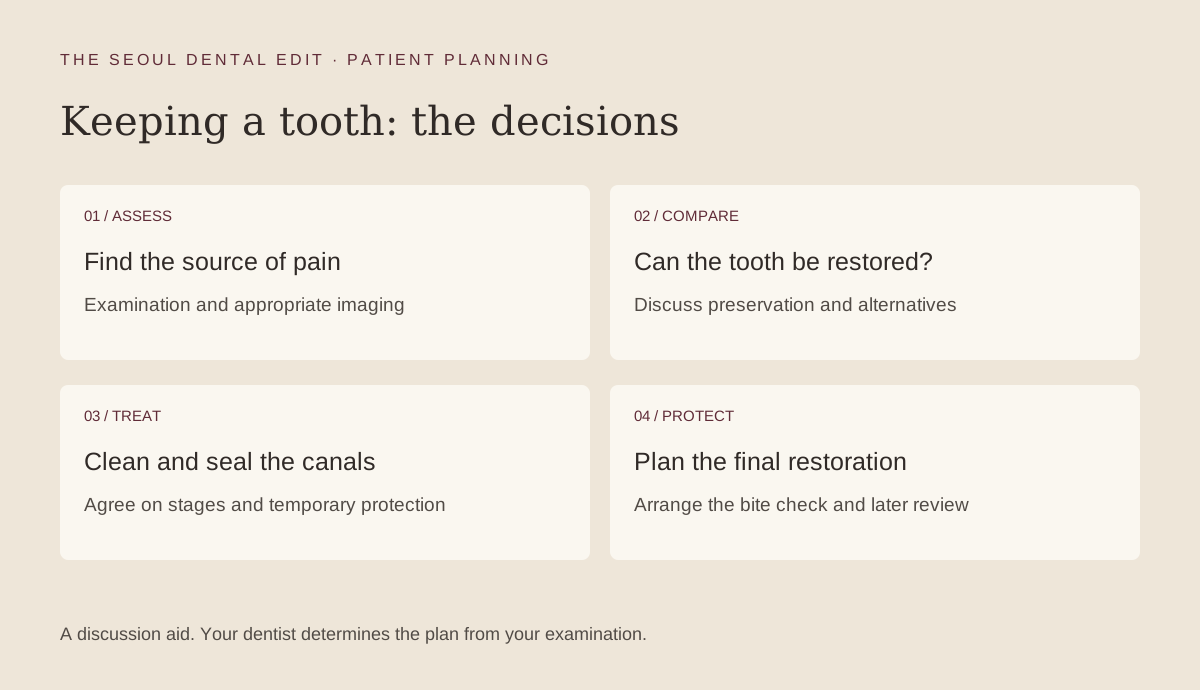
Root-end surgery is one possible way to manage persistent disease around a tooth root when ordinary treatment through the crown is unsuitable or has not resolved the problem. It is not simply a stronger version of a root canal. The clinician should explain why the suspected cause is accessible surgically and why retreatment through the tooth is less appropriate in your case. Ask whether the existing crown and canal filling remain satisfactory and whether the tooth has enough structure and periodontal support to justify preservation.
The assessment before surgery
Images help the surgeon evaluate the root and nearby anatomy; additional imaging is used when it would answer a relevant clinical question. Your medical history, medicines, allergies and previous surgical experience also matter. Discuss any medicines that affect bleeding or bone healing without stopping them yourself. The consent conversation should cover the planned access, neighbouring structures and the possibility that direct inspection will reveal a fracture or another finding that changes the plan. An understandable explanation is especially important when an interpreter participates in the appointment.
What surgery is intended to accomplish
The surgeon reaches the affected area through the gum, manages diseased tissue and treats the root end as appropriate. The wound is then closed and reviewed according to the chosen technique. Local anaesthesia is commonly used; additional anxiety management depends on the setting and the patient. Ask how long the appointment is expected to take, whether stitches require removal and which normal activities should be limited. Do not assume that a small incision means no swelling or that the tooth is ready for unrestricted use immediately afterwards.
Recovery and evidence of healing
Soft-tissue recovery and bone healing occur on different timelines. A comfortable gum does not mean the entire healing process is complete, and follow-up imaging may be needed later. Use the surgeon's written instructions for oral hygiene, eating and medicines. Contact the clinic about increasing swelling, persistent bleeding, worsening pain or altered sensation. Difficulty swallowing or breathing needs emergency attention. For travel planning, allow for the first postoperative review and a possible unplanned visit instead of scheduling departure immediately after the procedure.
Questions that make the choice clearer
Ask what surgery offers for this tooth, what uncertainty remains and what the next step would be if healing is incomplete. Compare the alternative of retreatment, extraction with replacement, or observation where clinically appropriate. Request the surgical report, images and any relevant pathology result for your home dentist. A root-end procedure still leaves a tooth that needs routine care and a sound restoration. Agree who will check the final outcome and how the Seoul clinic will exchange information with a clinician in your home country.
Patient questions
How is an apicoectomy different from root canal retreatment?
Retreatment works through the tooth to address the canal system. An apicoectomy approaches the root end surgically through the gum. The suspected cause and access limitations help determine which approach is appropriate.
Does a healed gum mean the apicoectomy is fully successful?
Not necessarily. The soft tissue may settle before the surrounding bone has healed. Follow-up examination and, when indicated, imaging are used to assess the longer-term result even if the tooth feels comfortable.
Explore related care in Seoul
These profiles describe published clinical interests and services. Compare the team and ask whether the proposed care fits your diagnosis.
- Lime Tree Dental Hospital — Myeongdong
- Magok Pureunmaeum Dental Clinic — Magok · Gangseo
- Dr. Minji Kang — Conservative dentistry and tooth restoration at Lime Tree Dental Hospital.
- Dr. Park Hyo Jin — Conservative dentistry and aesthetic restoration at Magok Pureunmaeum Dental Clinic.
Clinical references and further reading for the explanations on this page. The guide is general patient education; your dentist determines the plan for your examination findings.
AAE: endodontic surgery >AAE: endodontic retreatment >