Quick answer
If whitening causes increasing discomfort, contact the treating dentist about pausing or changing the plan rather than applying more gel or extending wear time. Temporary sensitivity can occur, but persistent pain, swelling or pain focused on one tooth needs assessment. Use only the instructed amount and schedule, and report trays that rub or fail to seat properly.
Why sensitivity deserves attention
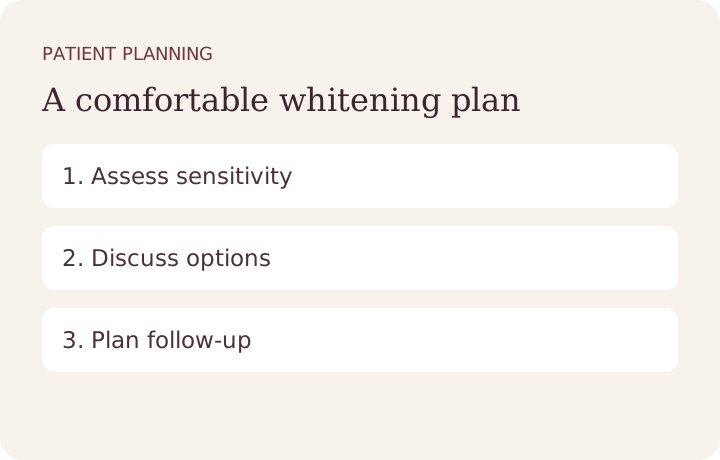
Tooth sensitivity and gum irritation can occur with peroxide whitening. The American Dental Association describes sensitivity as often temporary, but a patient cannot safely assume every pain after whitening has the same cause. Before starting, tell the dentist if cold, sweet foods, brushing or breathing in already hurts, and identify whether one tooth or several are affected. Exposed root surfaces, decay, cracks, worn restorations or gum problems may need assessment before a cosmetic treatment. Establishing the baseline helps you and your clinician distinguish expected short-lived sensitivity from a symptom requiring a separate examination.
References: American Dental Association: whitening · NHS: teeth whitening
Describe the sensation clearly
Tell the clinic when the discomfort began, which teeth or areas are affected, whether it is sharp or aching and what triggers it. Note whether it stops promptly when a cold stimulus is removed, persists, wakes you from sleep or occurs without a trigger. Mention gum soreness, a white or irritated patch where gel touched tissue, and the product, concentration, wear time and number of applications if known. These details help a dentist decide whether to pause the course, adjust it or examine another cause. A single painful tooth, persistent spontaneous pain or swelling should not be treated as an ordinary cosmetic inconvenience.
References: American Dental Association: whitening · NHS: teeth whitening
When to pause and seek assessment
Do not push through increasing pain to complete a schedule. Stop using the whitening product and contact the treating dentist for individual advice if sensitivity or irritation is troublesome. Seek a dental examination for persistent or spontaneous pain, a localised severe toothache, gum injury or swelling. Rapidly increasing facial swelling, difficulty breathing or swallowing, or severe illness calls for emergency care. A dentist may need to assess a crack, decay, exposed root, restoration or another problem rather than simply changing whitening strength. If you are already outside Seoul, seek a local dentist and provide the product information and treatment record.
References: American Dental Association: whitening · NHS: teeth whitening
What happens at a pre-whitening visit
An appropriate consultation begins with your goals, dental history and a discussion of what whitening can and cannot change. The dentist can examine teeth and gums, assess sensitivity and identify existing crowns, fillings or veneers. Ask whether any dental disease needs treatment before whitening, and whether the visible colour is likely to respond to bleaching or has another cause. Discuss your desired result in realistic terms rather than assuming every tooth will reach a particular shade. Images or prior colour records can support discussion, but no picture guarantees the result. Ask about costs, number of visits and the plan if you become uncomfortable.
References: American Dental Association: whitening · NHS: teeth whitening
Tray and in-office choices
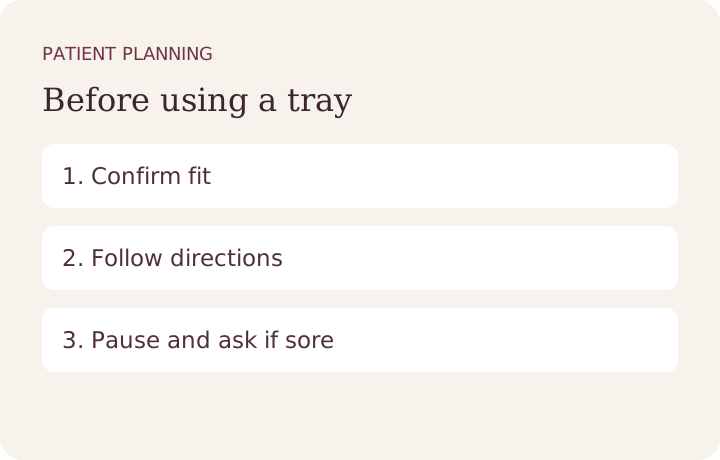
A dentist may discuss in-office treatment, a dentist-directed home tray or another approach appropriate to the examination. Concentration, exposure time, tray fit and existing sensitivity matter, and an apparently faster method is not automatically better for every person. Ask what product is used, who will explain the application, how the gum is protected and how to adjust or stop the plan if irritation occurs. For home use, receive written directions on the amount and wear schedule in a language you understand. Do not combine strips, trays or additional gels on your own to accelerate results. Keep the packaging so a clinician can identify the product later.
References: American Dental Association: whitening · NHS: teeth whitening
Existing crowns, veneers and fillings
Whitening acts on natural tooth structure; it does not reliably change the colour of existing restorative materials in the same way. A crown, veneer or visible filling may therefore look different from neighbouring natural teeth after whitening. Discuss this before starting rather than committing to replacement restorations in advance. A dentist can explain which existing restorations are visible, whether a temporary colour mismatch is acceptable and when any later shade decision should be considered. Replacement is a separate clinical and financial choice and is not automatically necessary. Ask for a written plan that distinguishes optional cosmetic adjustments from treatment needed for tooth health.
References: American Dental Association: whitening · NHS: teeth whitening
Practical measures during a course
Use the exact plan supplied by the clinician and ask before changing the duration or frequency. With a tray, too much gel can leak onto gums; report an uneven fit or tissue irritation rather than adding more product. A clinician can advise whether a desensitising toothpaste or a pause is suitable for your circumstances. Gentle routine brushing remains important, but avoid vigorous scrubbing and unproven abrasive powders. Do not apply household bleach, acidic mixtures or pain medicines directly to a tooth or gum. Stop and seek advice if symptoms worsen. These measures support safe discussion and do not substitute for an examination when pain persists.
References: American Dental Association: whitening · NHS: teeth whitening
Planning treatment in Seoul and after return
If you are visiting Seoul briefly, ask what must be completed in person and what can safely continue at home. Find out how the clinic will respond to irritation, whether a review is included, and what happens if an adjustment is needed after you leave. Carry the product name, directions, a record of the shade discussion and contact information for the treating team. Identify a dentist at home who can assess persistent pain, a damaged tray or an unrelated dental problem. A remote message can help with simple questions, but swelling, severe pain or other concerning symptoms may need timely in-person care where you are.
References: American Dental Association: whitening · NHS: teeth whitening
A relevant Seoul clinic to investigate
OnO Dental Clinic is listed on this platform and its international website identifies cosmetic dentistry among its services. Its listing may be useful for an initial discussion of whitening goals, existing restorations and whether sensitivity needs assessment first. Confirm the exact whitening service, product, appointment availability and cost directly before arranging travel. The selection is based on the clinic’s published relevant service, not a claim of superiority or a guarantee of results. Review its profile and international website; if the discomfort is severe or accompanied by swelling, seek timely dental or emergency care rather than waiting for a cosmetic consultation.
References: OnO Dental Clinic international website
Questions for your dentist
What is causing my existing sensitivity, and should it be treated before whitening? Which teeth and restorations will not change colour in the same way? What are the product, concentration and wear instructions? What level of discomfort should prompt me to pause and call? How will irritated gums or a poorly fitting tray be managed? Is a desensitising product appropriate for me? What is included in the written quote and how is a review arranged after I return home? Ask whether the plan can be adapted to your comfort and schedule. You can decide not to whiten or to postpone until dental health concerns are addressed.
References: American Dental Association: whitening · NHS: teeth whitening
Will sensitivity always disappear immediately?
Sensitivity associated with whitening is often transient, but its duration and cause vary. A symptom that persists, becomes spontaneous or is concentrated in one tooth needs assessment rather than an assumed timeline. The dentist may ask you to pause and can investigate other causes, including decay, gum recession, a crack or a restoration problem. Keep a record of when you last used the product and what you felt. A visible shade change is not a reason to continue a course that causes escalating pain. Seek urgent help for marked swelling or systemic illness, and emergency help for breathing or swallowing difficulty.
References: American Dental Association: whitening · NHS: teeth whitening
Is every type of sensitivity caused by whitening?
No. Whitening can cause temporary sensitivity, but a patient may also have discomfort from decay, exposed root surfaces, a crack, gum inflammation or a restoration. Timing alone cannot distinguish these causes. Tell the dentist whether the pain existed before treatment, which tooth is affected and whether the sensation is triggered or occurs spontaneously. An examination may change the plan from cosmetic whitening to care for an underlying dental problem. Avoid using more whitening product as a way to test the tooth. If severe pain or swelling is present, arrange timely professional assessment rather than waiting for a routine cosmetic review.
References: American Dental Association: whitening · NHS: teeth whitening
What does gum irritation look like?
Gel that contacts the gum can cause soreness or a pale irritated area. The appearance and severity vary, and an examination may be needed if discomfort is significant or persists. Stop the product and ask the treating clinician for advice. For a tray system, bring the tray and product so the dentist can assess whether it fits and whether excess gel is escaping. Do not cut or reshape a tray without instructions, apply household chemicals, or continue longer wear to compensate for a missed session. Ask how to resume only after the clinician has assessed the problem; resuming is not obligatory if you decide the trade-off is not worthwhile.
References: American Dental Association: whitening · NHS: teeth whitening
What happens if the result is uneven?
Natural teeth may respond differently, and restorations do not bleach in the same way as enamel. An uneven result should be reviewed rather than covered immediately by more gel or an irreversible procedure. Ask whether colour differences relate to natural tooth variation, a filling, a crown, exposed root or another cause. The clinician can explain whether observation, a modified whitening plan or a separate restorative discussion is reasonable. Ask about the limits, risks and cost of each option. It is acceptable to stop treatment, keep an existing restoration or seek another opinion; appearance alone does not establish a medical need to replace healthy work.
References: American Dental Association: whitening · NHS: teeth whitening
Is whitening safe during pregnancy or for children?
Age, pregnancy and breastfeeding can change the discussion, and local rules about who can receive or provide whitening vary. Tell the clinician if you are pregnant, breastfeeding, or planning care for a child. Ask whether an elective whitening course should be deferred and what local professional guidance applies to your circumstances. Do not assume a product marketed online is suitable because it can be purchased without an examination. Necessary dental assessment or treatment should not be delayed simply because cosmetic whitening is postponed. A clinician can distinguish a cosmetic question from pain, decay or another condition requiring attention.
References: American Dental Association: whitening · NHS: teeth whitening
Explore the care and related reading
Explore related care in Seoul
These profiles describe published clinical interests and services. Compare the team and ask whether the proposed care fits your diagnosis.
- OnO Dental Clinic — Sinsa · Gangnam
- Smile View Dental — Gangnam · Sinnonhyeon
- Dr. Hoijin Oh — Aesthetic dentistry and prosthodontic care at OnO Dental Clinic.
- Dr. Han-gyeol Kim — Integrated dentistry and smile planning at Smile View Dental.
Clinical references and further reading for the explanations on this page. The guide is general patient education; your dentist determines the plan for your examination findings.
American Dental Association: whitening >NHS: teeth whitening >OnO Dental Clinic international website >