Quick answer
Dental veneers cover the front of selected teeth to change shape or colour. Before treatment in Seoul, check gum health, decay, bite and alternatives such as whitening, orthodontics or limited bonding. Ask how much enamel each tooth would lose, review the proposed appearance before final bonding, and plan for future repair or replacement.
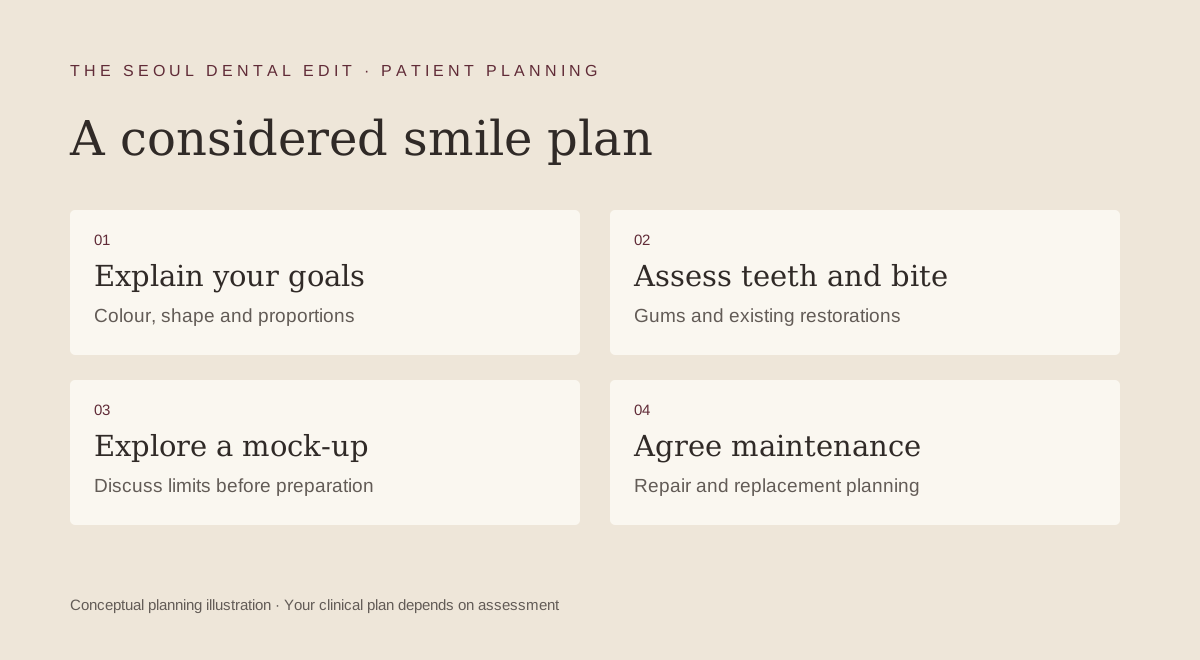
Dental veneers in Seoul: decide on the tooth, not the package
Dental veneers in Seoul can improve the colour, shape or proportions of selected teeth, but the right plan depends on your enamel, gums, bite and goals. A veneer covers the visible surface; it does not move the root, cure gum disease or make a damaged tooth healthy. Many veneer preparations permanently remove tooth tissue. Before choosing a material or booking travel, establish whether a less invasive option could achieve the change you want. The important decision is not simply which smile looks attractive in a photograph, but what you are prepared to maintain over the years.
Start with one specific concern: a chipped edge, a dark tooth, uneven proportions or spaces. These problems can require different treatments. Bring photographs that explain your preferences, but describe what you like about them rather than asking for another person’s teeth. Tooth size, lip movement, gum levels and your existing bite shape what is realistic. A careful consultation should allow you to decide that treatment is unnecessary as well as to choose treatment.
References: ADA: Veneers
Who may benefit, and when to pause
Veneers may be considered for selected shape defects, minor gaps, chips or discoloration that cannot be addressed adequately with simpler care. Suitable teeth need an assessment of remaining structure and the surfaces available for bonding. National Healthcare Group guidance highlights the importance of sufficient enamel and cautions about teeth with large existing fillings. A tooth that looks intact from the front may still have a substantial restoration behind it, so photographs alone cannot establish suitability.
Active decay and gum problems should be addressed before cosmetic bonding. Grinding, clenching, a difficult bite or extensive wear may change the design or make another approach more appropriate. Explain any pain, sensitivity, previous injury or root-canal treatment. If a proposed plan treats many healthy teeth, ask why each tooth is included. The visible width of your smile may inform design, but it does not automatically justify preparing every visible tooth.
References: National Healthcare Group: Veneers
Compare alternatives before agreeing to enamel removal
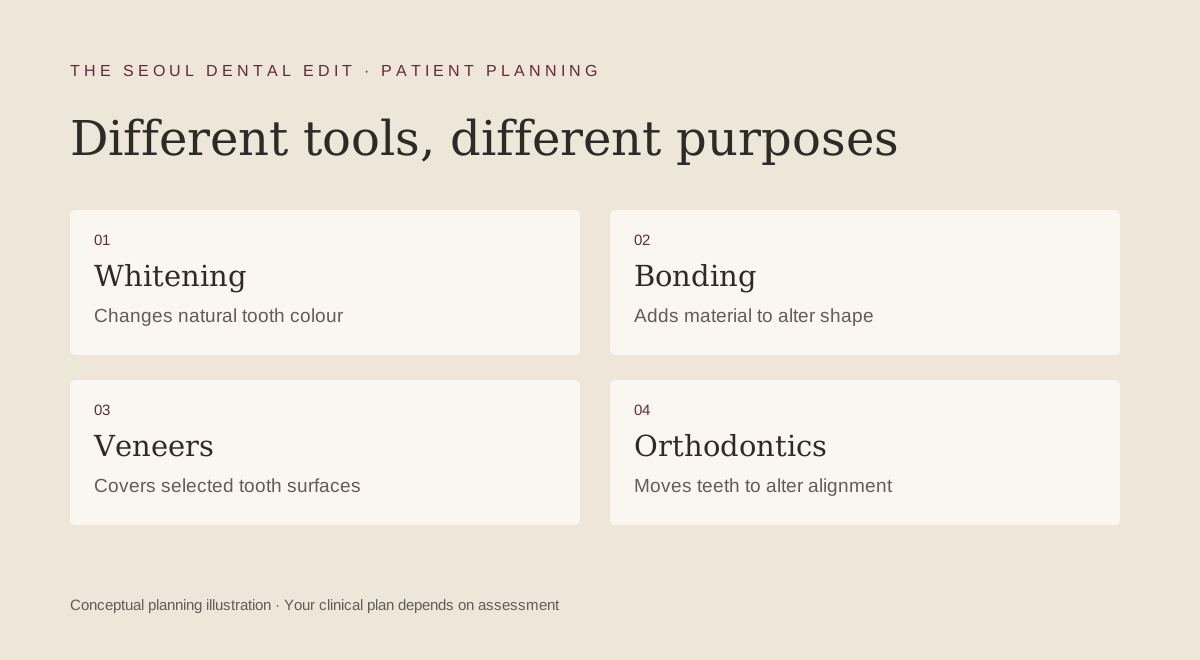
A small chip or local shape concern may be manageable with additive composite bonding. Discoloration may respond to whitening, although the cause of the colour change matters and existing restorations will not necessarily change with natural teeth. Orthodontics moves teeth and their roots; veneers alter the visible shape. When alignment is the main concern, comparing these approaches can reveal whether a faster cosmetic change requires an avoidable sacrifice of sound tissue.
A crown surrounds more of a tooth than a veneer and serves a different restorative purpose. It should not be presented as the same procedure under a different marketing name. For a heavily damaged tooth, however, a different restoration may be clinically justified. Ask the dentist to show where preparation is proposed and to name the restoration accurately in your written plan. Doing nothing, treating only one tooth or staging a decision are reasonable options to discuss when the concern is cosmetic rather than urgent.
References: ADA: Veneers · University of Rochester Medicine: Considering veneers
Porcelain, composite and the meaning of no-prep
Porcelain veneers are custom-made ceramic restorations. Composite veneers use tooth-coloured resin shaped and bonded to the tooth. Material choice affects appearance, repair options, laboratory involvement and maintenance. The American Dental Association describes advantages and trade-offs for both rather than identifying one material as best for everyone. Ask how your proposed material suits the particular tooth and what happens if a small edge chips. A repairable problem and a restoration requiring complete replacement have different practical consequences.
No-prep describes an approach to tooth preparation, not a universal guarantee of reversibility or suitability. Adding material to an already prominent tooth may create unwanted bulk; changing a dark underlying colour can also complicate design. Ask whether any enamel alteration is planned on each tooth, including around the edges or contacts, and whether that could change during treatment. A brand name or a promise of thin ceramic does not answer these questions. The consent discussion should describe the actual procedure you will receive, not only the label used to advertise it.
References: ADA: Veneers · National Healthcare Group: Veneers
What a useful consultation should establish
Expect discussion of your medical history, dental history and aesthetic priorities, followed by an examination of teeth, gums and bite. Imaging should answer a clinical question, such as whether there is disease or an existing restoration that changes the plan. Bring previous records where available, but allow the dentist to decide whether they are adequate. Tell the team about grinding, recent whitening, sensitivity and any previous difficulties with dental materials or treatment.
Ask for a tooth-by-tooth proposal rather than only a total number of veneers. It should explain the problem being addressed, the material, the expected preparation and the alternatives. Clarify who will perform the preparation and bonding and who will review the result. If you need English communication, confirm how the treating clinician will explain risks and obtain consent. A fluent booking conversation is useful, but it does not by itself establish how clinical decisions will be discussed.
References: ADA: Veneers
From design to final bonding
Planning may involve photographs, digital scans, models or a temporary preview. These can help communicate proportions and tooth length, but a digital image is not a guarantee of the final result. Ask how you will evaluate the proposal before irreversible preparation and what changes remain possible at each stage. A preview can also help you notice whether the intended change feels too large or too uniform for your preferences.
Depending on the technique, teeth may be prepared and temporary restorations used while the definitive veneers are made. Before final bonding, discuss colour, shape, fit and the overall appearance under appropriate viewing conditions. Report concerns while they can still be assessed. After bonding, the clinician checks contacts and the bite and explains cleaning and review. The precise sequence varies with material and complexity; a same-day workflow does not remove the need for diagnosis, consent or careful finishing.
References: ADA: Veneers
Risks and the longer commitment
Where enamel is removed, the change is permanent even though the veneer itself will not necessarily last forever. Sensitivity, chipping, detachment, gum irritation and problems with the supporting tooth can require further care. The risk is individual, influenced by the original tooth, preparation, bite and maintenance. A survival figure from a study or advertisement cannot predict how long your own restoration will last. Ask what kinds of repair or replacement are realistic if a problem develops.
Consider future care before treatment rather than treating it as an unexpected exception. A veneer does not protect the entire tooth from decay, and the gumline can change over time. Replacement may require further decisions about the remaining tooth structure. Persistent pain, a bite that feels distinctly wrong or a loose restoration should be assessed. Do not try to bond a detached veneer yourself; contact a dentist and keep the restoration safely if it has come away.
References: ADA: Veneers · University of Rochester Medicine: Considering veneers
Plan your Seoul visit around clinical checkpoints
Ask the clinic for the expected sequence of consultation, any preparatory care, design, fabrication, bonding and review. Different plans may need different numbers of visits. Avoid interpreting an advertised treatment time as a guarantee that your complete care will fit the same schedule. If gum treatment, further investigation or a design change is needed, the timetable may change before any veneer is placed.
Leave room to discuss the plan without pressure from a departing flight. Confirm what happens if you are not ready to approve the design or if a veneer needs adjustment. Before leaving Korea, obtain a treatment summary, material information where relevant, images or records useful for ongoing care and written instructions. Establish who will assess a problem at home and how the Seoul clinic will communicate with that clinician. Remote messages can support follow-up but cannot perform a physical examination or repair.
References: ADA: Veneers
Understand the quotation and maintenance
Compare itemised proposals that describe the same treatment. The number of teeth, material, laboratory work, temporary restorations, preliminary treatment and review arrangements can all affect the quotation. Ask whether design changes, remakes before bonding and later repairs are included or separately charged. A warranty should be read for its actual conditions, including attendance, exclusions and whether you must return to Seoul. It is not a clinical guarantee or a substitute for a practical aftercare plan.
Continue brushing with fluoride toothpaste and cleaning between teeth as your team demonstrates. Avoid using teeth to open packaging or bite hard objects. If grinding is relevant, ask whether a protective appliance is appropriate and how it should be reviewed. Regular dental assessments remain important even when the veneers look unchanged. The most sustainable result is one whose cleaning, reviews and possible future repair fit your life, not only the budget for the initial visit.
References: ADA: Veneers
Can I get veneers without having my teeth shaved?
Some selected cases allow little or no preparation, but that cannot be established from a preference for no-prep treatment alone. Tooth position, available space, colour and the intended shape all matter. Ask the clinician to explain the proposed preparation for each tooth and whether any change would be discussed before proceeding.
References: ADA: Veneers · National Healthcare Group: Veneers
How many days should I stay in Seoul for veneers?
There is no reliable universal stay length for every veneer plan. Request an appointment sequence after assessment, including any necessary preparatory care and a review after bonding. Keep flexibility for design changes or clinical findings. A promised fabrication time is only one part of treatment and should not replace a complete travel and aftercare plan.
References: ADA: Veneers
A listed clinic and doctor to consider for a veneer consultation
New York S Dental Clinic in Jongno is a relevant consultation option because its international website lists cosmetic and restorative care, and its official veneer service page describes both ceramic and composite options. This makes it useful for discussing whether a veneer is necessary or whether a smaller restoration could address your concern. The recommendation is based on listed services and a named clinician, rather than a ranking or a promised result.
Dr. MinJi Kim is listed on Seoul Dental Edit and identified by the clinic’s veneer service page as assessing enamel, bite and aesthetic goals. That page also describes English-language explanations. Review the clinic and doctor profiles, then use the international website to request a consultation about your own suitability. Ask who will provide each treatment stage and whether the proposed schedule allows time for design review and follow-up. Published service information establishes a relevant starting point; your examination determines the actual plan.
References: Official clinic veneer service · International clinic website
Explore the care and related reading
Clinic profile — New York S Dental Clinic >
Dentist profile — New York S Dental Clinic >
International website — New York S Dental Clinic >
Official treatment information — New York S Dental Clinic >
Porcelain veneers or composite bonding >
No-prep veneers: suitability and limitations >
Explore related care in Seoul
These profiles describe published clinical interests and services. Compare the team and ask whether the proposed care fits your diagnosis.
- OnO Dental Clinic — Sinsa · Gangnam
- Smile View Dental — Gangnam · Sinnonhyeon
- Dr. Hoijin Oh — Aesthetic dentistry and prosthodontic care at OnO Dental Clinic.
- Dr. Han-gyeol Kim — Integrated dentistry and smile planning at Smile View Dental.
Clinical references and further reading for the explanations on this page. The guide is general patient education; your dentist determines the plan for your examination findings.
ADA: Veneers >National Healthcare Group: Veneers >University of Rochester Medicine: Considering veneers >Official clinic veneer service >International clinic website >