Quick answer
Persistent bad breath often warrants a dental assessment of plaque, tongue coating, gum health, decay and dry mouth. Better cleaning may help, but masking the smell with mouthwash does not identify the cause. If oral causes are addressed and the problem continues, further medical assessment may be appropriate. Seek review sooner when there is pain, swelling or another persistent mouth change.
Persistent odour deserves a practical approach
Bad breath can be affected by food, smoking, oral deposits, dryness and dental problems, among other causes. It is common to feel embarrassed, but a clear history helps the dentist identify a useful next step. Explain whether the problem is constant, mostly on waking or linked to particular situations. If possible, distinguish a concern you notice yourself from one someone else has observed. Avoid assuming that a stomach problem is the cause before the mouth has been assessed.
Look for treatable oral contributors
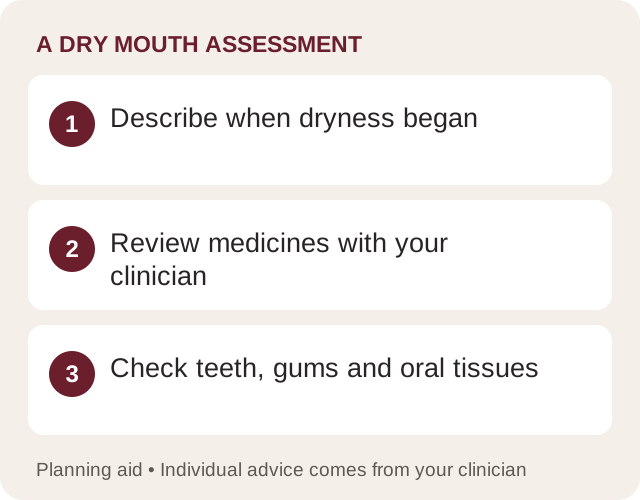
The examination may review plaque, tongue coating, decay, tissue health, dentures and areas where food becomes trapped. The dentist should also ask about medicines and dry-mouth symptoms. A persistent food trap can need a different solution from inadequate cleaning around a bridge. Ask which findings are likely to contribute and how they will be addressed. A cosmetic cleaning or a strong rinse may temporarily change the sensation without resolving the source.
Build a gentle cleaning routine
Brushing with fluoride toothpaste, cleaning between teeth and appropriate tongue cleaning can be useful. Technique should be gentle; scrubbing until tissues bleed is not an effective strategy. Dentures need their own cleaning and storage routine as advised. If you use a mouthwash, ask whether it is intended for ongoing use or a limited course. Frequent sugary mints can create another dental problem, while an alcohol-containing product may be uncomfortable for someone with dryness.
When the dental examination is reassuring
If oral causes have been addressed and the problem persists, the dentist may suggest medical assessment for other contributors. Report symptoms such as reflux, nasal or throat problems and persistent dryness. Do not repeatedly buy increasingly aggressive oral products without a diagnosis. Some people remain distressed about breath despite reassuring assessment; that concern still deserves a respectful conversation and an appropriate plan. The aim is to identify evidence and improve comfort, not dismiss the problem.
Make follow-up specific
Agree on the changes to try, the review interval and what information to bring back. For a Seoul visit, ask for a summary of findings so follow-up can continue at home. If there is pain, swelling, loose teeth or another new symptom, arrange assessment rather than waiting for an elective appointment. Lasting improvement usually depends on addressing the cause and maintaining a routine, while perfumes, lozenges and rinses mainly offer short-lived masking.
Avoid changing everything at once
If several home-care changes are recommended, ask which are most important and how improvement will be assessed. Keeping the plan focused helps you know what is useful. Persistent symptoms despite a reasonable trial should lead to reassessment rather than an indefinite cycle of stronger rinses and masking products.
Patient questions
Why can bad breath continue even when I brush?
Brushing alone may miss areas between teeth, tongue coating or established gum disease. Dry mouth and other contributors also need assessment rather than simply stronger mouthwash.
Does bad breath always come from the stomach?
No. Many causes arise in the mouth. A dental examination is a useful starting point, with medical referral considered when oral findings do not explain the persistent problem.
Explore related care in Seoul
These profiles describe published clinical interests and services. Compare the team and ask whether the proposed care fits your diagnosis.
- OnO Dental Clinic — Sinsa · Gangnam
- Dr. Se Hong Oh — Bite function, jaw-joint care and orthodontic treatment at OnO Dental Clinic.
Clinical references and further reading for the explanations on this page. The guide is general patient education; your dentist determines the plan for your examination findings.
NHS: bad breath >NIDCR: dry mouth >