Quick answer
Orthodontic treatment in Seoul involves diagnosis, a plan for tooth movement and bite correction, regular monitoring and long-term retention after active treatment. A suitable plan considers gum health, existing dental work and your ability to attend reviews. If you live abroad, establish who will supervise each stage before starting, because appliance choice alone does not solve continuity-of-care problems.
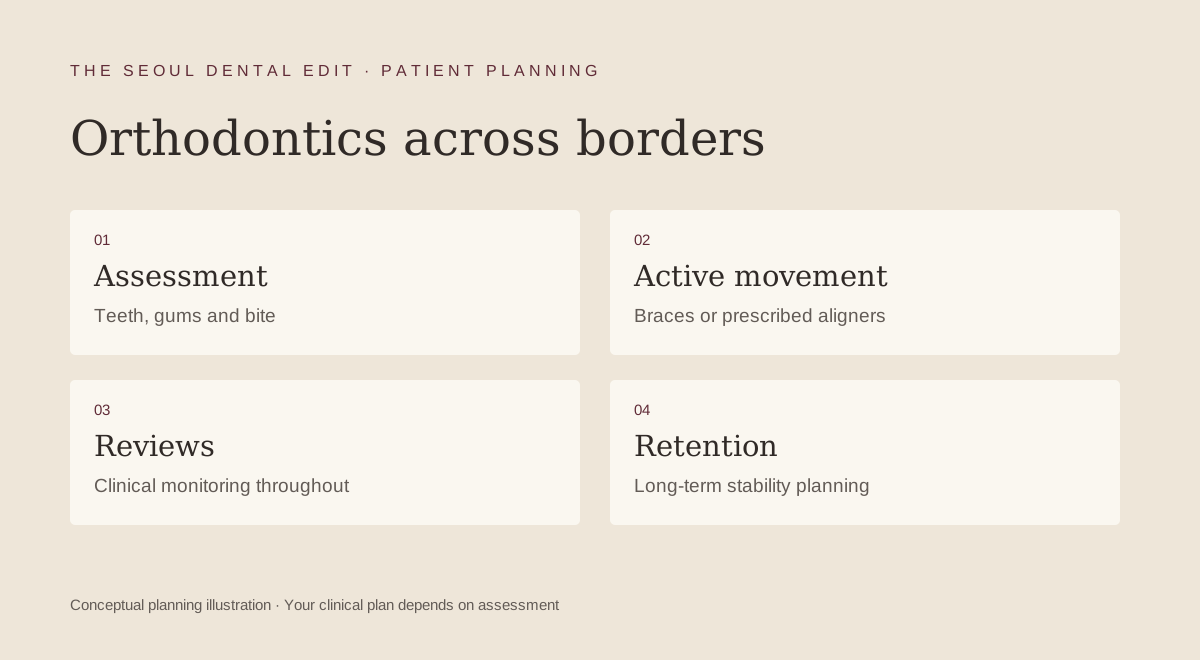
Orthodontic treatment in Seoul begins with a continuing care plan
Orthodontic treatment in Seoul can improve tooth alignment and the way teeth meet, but the right starting point is an examination and a realistic plan for continuing care. Braces and clear aligners are different tools for moving teeth; neither removes the need for diagnosis, progress reviews and retention. For someone living in Seoul, the question is whether the treatment fits daily life. For an overseas visitor, it is also whether the necessary appointments can be attended throughout the course.
Start by explaining your concern in ordinary language. Perhaps crowded lower teeth are difficult to clean, a front tooth stands out in photographs, or your teeth do not meet comfortably when eating. Ask the clinician to distinguish what orthodontics can change from concerns involving tooth colour, shape or missing teeth. That distinction prevents a consultation about a smile from becoming a list of unrelated procedures.
References: NHS: braces · American Association of Orthodontists: adult orthodontics
What the first assessment needs to answer
A meaningful assessment connects your goals with the condition of the whole mouth. The clinician reviews your dental and medical history, examines the teeth and bite, and considers the gums and supporting tissues. Photographs, scans or models help document the starting position. Imaging should answer a clinical question; ask what each proposed image is intended to establish rather than assuming more scanning means a better plan.
Bring information about previous orthodontics, dental injuries, root canal treatment and existing restorations. Mention a tooth that has previously changed colour or become loose, even if it no longer hurts. These details may affect the proposed movement or monitoring. If you have old radiographs, ask whether they are useful before arranging replacements.
The appointment should leave you understanding the diagnosis, not simply the name of an appliance. Ask the clinician to show where the difficulty lies and describe the intended endpoint. A useful explanation separates alignment of the visible teeth from correction of the overall bite.
References: British Orthodontic Society: patient questions before treatment
Who may benefit, and when waiting is reasonable
Adults as well as teenagers can be considered for orthodontic care. Age alone does not decide suitability; oral health, the proposed movement and the ability to maintain treatment matter. Crowding, spaces, prominent teeth and some bite relationships are common reasons to seek an assessment. A person can also choose to retain a minor irregularity when it causes no meaningful concern and the balance of treatment benefits and burdens is unconvincing.
Active decay or gum problems need assessment before tooth movement. Treatment may be postponed while these are addressed and cleaning improves. This is preparation for protecting the teeth, not an administrative obstacle. Ask what must change before treatment can safely start and who will check that it has changed.
Limited treatment may be appropriate for selected goals, but it should have explicit boundaries. Understand what it will leave unchanged. If a substantial jaw relationship contributes to the problem, ask whether orthodontics alone can meet your aims or whether a separate multidisciplinary opinion would help.
References: NHS: braces · American Association of Orthodontists: adult orthodontics
Choosing braces or aligners by the work they need to do
Fixed braces attach brackets and wires to the teeth. Clear aligners use a prescribed sequence of removable trays. Both require clinical supervision, and an appliance that suited a friend may be unsuitable for your movement or bite. Discuss the advantages and limitations in your particular case before choosing primarily by visibility.
Fixed appliances remain in place, but still demand careful cleaning and regular adjustments. Removable aligners require consistent use according to the prescribed schedule. Ask the clinician to explain any attachments, elastics or other components that form part of the plan. A discreet appliance is not necessarily a simple treatment.
For work and everyday life, consider what you can maintain reliably. Describe frequent business travel, meals away from home, sport or musical instruments when these affect appliance care. Request a demonstration of cleaning and insertion or removal where relevant. Being able to describe the daily routine in your own words is a useful test of whether the proposed option feels manageable.
References: American Association of Orthodontists: treatment options
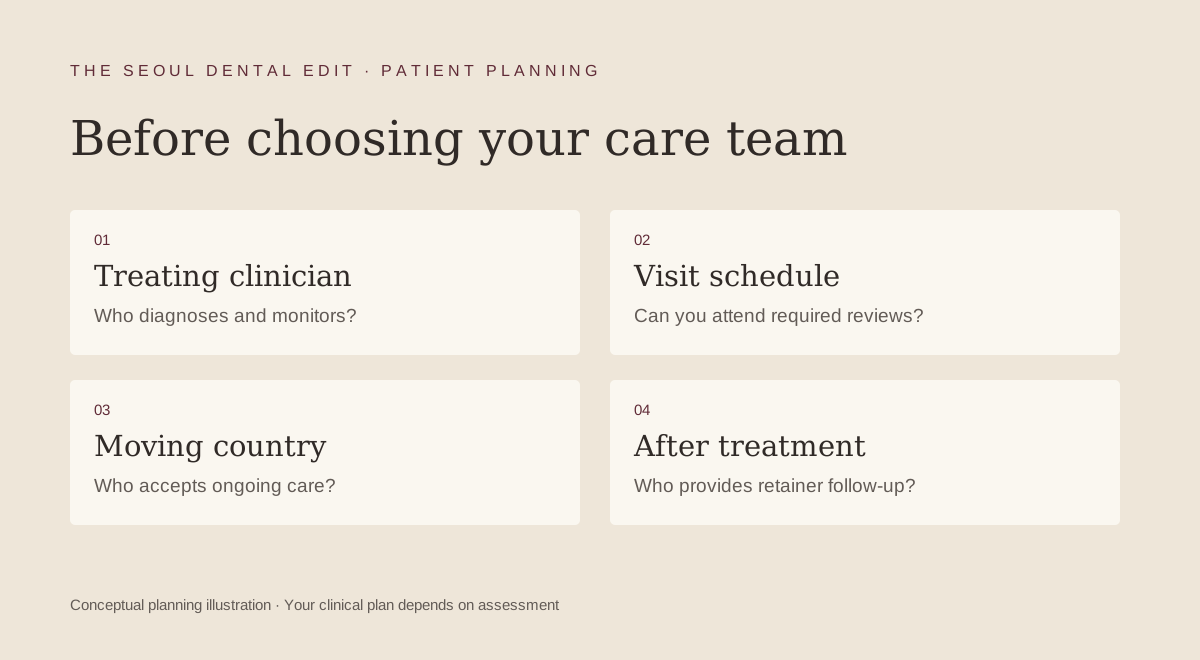
Agree the stages before discussing a finishing date
The treatment proposal should connect diagnosis, preparation, active movement, finishing and retention. Ask whether any teeth must be removed, whether space will be created another way, and what alternatives were considered. These decisions deserve explanation before irreversible work occurs. Do not assume that an appliance brand determines whether extraction is necessary.
Timing is an estimate, not a promise tied to a wedding, graduation or flight. Your clinician can explain the expected course for your diagnosis and the factors that might change it. Biology, missed visits, damaged appliances and changes in the treatment plan can affect progress. Ask how delays are communicated and when the estimate will be reviewed.
At follow-up appointments, ask what has changed since the previous visit and what the next stage is meant to accomplish. If the proposed endpoint changes, request an explanation of the benefit, limitation and any financial implication. A shared record of the goal makes this discussion easier than judging progress from front-facing photographs alone.
References: British Orthodontic Society: patient questions before treatment
Understand the risks that matter for your teeth
Orthodontic care can leave unwanted effects as well as improvements. Plaque accumulating around appliances can contribute to enamel marks, decay and gum inflammation. Tooth roots can shorten during movement; the significance varies, and some patients need closer monitoring or a change in plan. Existing dental trauma should be discussed because an injured tooth may behave differently during treatment.
Ask which risks are most relevant to your baseline findings. A general consent form cannot replace a conversation about vulnerable teeth, gum recession or previous dental work. Understand what would cause the clinician to pause treatment or accept a more limited result. The aim is a result that remains healthy and maintainable, rather than completion at any cost.
Some adults notice spaces near the gums becoming more visible after crowded teeth are aligned, sometimes called black triangles. Gum shape, tooth shape and existing tissue loss influence this issue. Ask whether it is a realistic concern for you. Report jaw pain or changes in opening and closing rather than assuming alignment will necessarily cure them.
References: British Orthodontic Society: treatment risks · NHG Health / Khoo Teck Puat Hospital: risks of braces treatment
Build oral care and comfort into the routine
Protecting enamel and gums is part of the orthodontic result. Brush carefully with fluoride toothpaste and ask the team to demonstrate how to clean around the particular appliance. Keep routine general dental examinations alongside orthodontic visits: an adjustment appointment has a different focus from a complete check for decay and other disease.
Temporary tenderness can occur after fitting or adjustment. Ask for suitable comfort advice before leaving and contact the clinic if pain is severe or unexpected. Report a loose bracket, broken wire or poorly fitting tray promptly. Avoid trying to accelerate treatment by changing appliance use yourself.
Make a practical plan for your usual week. Decide where you will keep a cleaning kit, how you will store removable appliances during meals and how you will contact the team if something breaks. Reducing frequent sugary snacks and drinks also matters. If cleaning is consistently difficult, ask for a technique review early rather than waiting until the end of treatment.
References: British Orthodontic Society: treatment risks
Living abroad changes the decision to start
A short visit to Seoul can be useful for an assessment, but it should not be confused with completing comprehensive orthodontic treatment. Before paying a deposit, put the proposed in-person visits next to your real work and travel calendar. Include the possibility of cancelled travel, illness and relocation. A plan that only works under ideal circumstances needs revision.
Ask who will provide hands-on care when you are outside Korea. Photographs can help communication, but an overseas message cannot repair an appliance. If transfer is likely, discuss it before starting and establish whether a receiving clinician is willing to take over. Having records is helpful; it is not the same as having an agreed continuing-care arrangement.
Request a clear handover package and financial terms. This might include the diagnosis, starting records, progress notes, appliance information and remaining treatment objectives. Ask how unfinished work, outstanding payments and replacement appliances are handled. If reliable supervision cannot be arranged, treatment nearer home or a later start may be the more workable option.
References: British Orthodontic Society: patient questions before treatment
Compare the whole quotation, including retention
Compare quotations against the same treatment scope. An alignment-only proposal and a comprehensive bite-correction plan may include very different work. Ask what the fee includes for records, appliance fitting, reviews, repairs, additional aligners if needed, appliance removal and retainers. Separate optional cosmetic finishing from the orthodontic work you actually intend to undertake.
Also discuss costs if treatment changes, pauses or transfers. Keep the terms in a language you understand, with a named contact for questions. For international care, add travel and accommodation to your own budget rather than comparing only the clinic fee. This article does not provide a typical Seoul price because a meaningful estimate depends on assessment and the specific proposal.
Retention belongs in that initial conversation. Once active movement ends, retainers help maintain alignment, and teeth can continue changing over time. Ask which type is planned, how it is worn and cleaned, who checks it, and how replacement is arranged. Removing braces is a transition to maintenance, not the end of every responsibility.
References: British Orthodontic Society: patient questions before treatment · British Orthodontic Society: treatment risks
A relevant clinic and dentist to explore
Origin Dental Clinic and Dr. Dong-ok Kang are listed in The Seoul Dental Edit and are relevant starting points for an orthodontic consultation. The clinic’s official orthodontics page identifies Dr. Kang as leading this service and describes fixed and removable appliance options. The published clinician biography lists orthodontic residency at Chung-Ang University Hospital. These are provider-published facts supporting the relevance of the recommendation, rather than a comparative ranking of clinicians.
Review the clinic and dentist profiles, then use Origin’s international website to ask about assessment with the named clinician. Explain whether you live in Seoul or will travel for reviews, and bring details of earlier treatment and current dental work. Ask which options fit your diagnosis, who monitors progress and how retention will be managed. The service listing does not establish your suitability or guarantee that a particular appliance will be recommended.
References: Origin Dental Clinic: orthodontic service · Origin Dental Clinic: Dong-ok Kang
Questions patients often ask
Can I choose aligners before the examination? You can express a preference, but suitability depends on the required movement, bite and oral health. Ask the clinician to compare reasonable alternatives and explain why the proposed tool fits the plan. The consultation should be useful even if your preferred appliance is not recommended.
Can I finish treatment elsewhere if I leave Korea? A transfer may be possible, but it needs discussion and acceptance by the receiving clinician. Ask about records, remaining objectives and fees before relocating. Do not assume that ordering more trays or possessing your original scan replaces a continuing-care arrangement.
References: American Association of Orthodontists: treatment options · British Orthodontic Society: patient questions before treatment
Explore the care and related reading
Clinic profile — Origin Dental Clinic >
Dentist profile — Origin Dental Clinic >
International website — Origin Dental Clinic >
Official treatment information — Origin Dental Clinic >
Clear aligners: suitability, attachments and refinements >
Fixed braces: metal, ceramic and practical differences >
Orthodontic treatment while living abroad >
Orthodontic retainers: protecting your result for the long term >
Explore related care in Seoul
These profiles describe published clinical interests and services. Compare the team and ask whether the proposed care fits your diagnosis.
- OnO Dental Clinic — Sinsa · Gangnam
- Smile View Dental — Gangnam · Sinnonhyeon
- Dr. Se Hong Oh — Bite function, jaw-joint care and orthodontic treatment at OnO Dental Clinic.
- Dr. Han-gyeol Kim — Integrated dentistry and smile planning at Smile View Dental.
Clinical references and further reading for the explanations on this page. The guide is general patient education; your dentist determines the plan for your examination findings.
NHS: braces >British Orthodontic Society: patient questions before treatment >British Orthodontic Society: treatment risks >American Association of Orthodontists: adult orthodontics >American Association of Orthodontists: treatment options >NHG Health / Khoo Teck Puat Hospital: risks of braces treatment >Origin Dental Clinic: orthodontic service >Origin Dental Clinic: Dong-ok Kang >