Quick answer
Dental implants in Seoul replace missing tooth roots and support crowns, bridges or dentures. Treatment begins with a tooth-preservation assessment and may include extraction, grafting, implant placement, healing and the final restoration. Several appointments over months may be needed, even when temporary teeth are fitted early. Compare the complete clinical plan, return visits and maintenance arrangements before booking.
Dental implants in Seoul: the complete treatment pathway
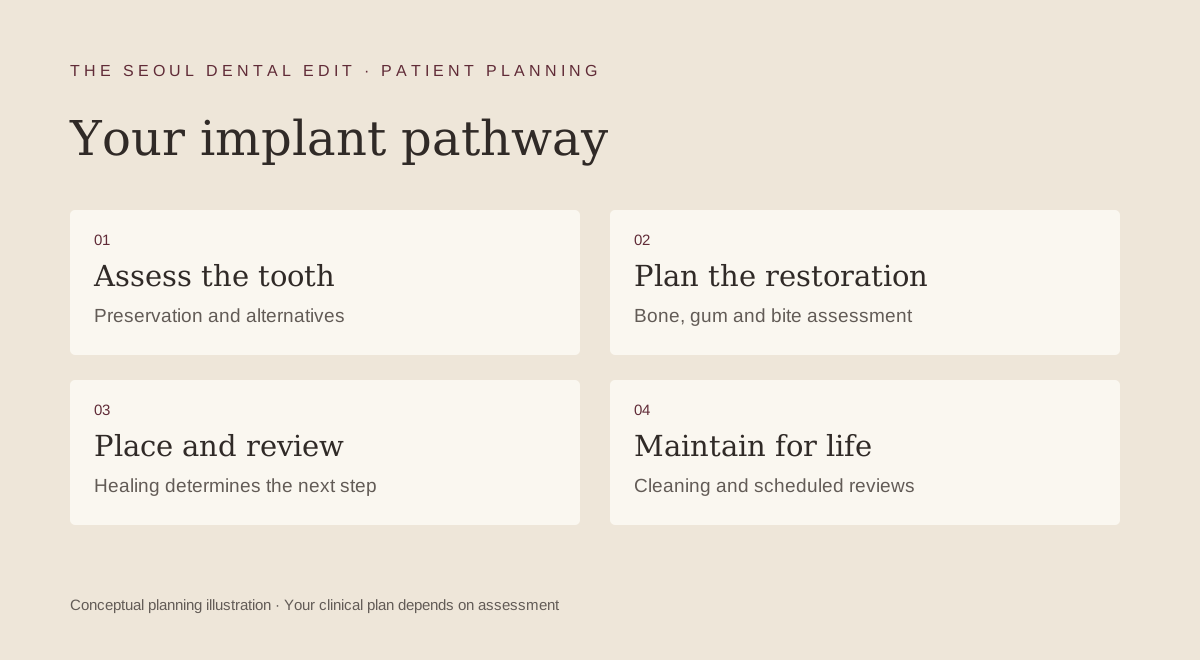
A dental implant replaces a missing tooth root and supports a crown, bridge or denture. For someone travelling to Seoul, the important decision is whether the complete pathway fits their mouth and their ability to return for care. Assessment, any preparatory treatment, surgery, healing and the final teeth are separate stages. A temporary tooth may improve appearance early, while the underlying treatment continues. Start with a diagnosis and a written sequence before choosing travel dates or comparing package prices.
References: FDA: Dental implants · Leeds Teaching Hospitals: Dental implants
Decide whether a tooth needs replacing
If the tooth is still present, ask whether it can reasonably be preserved. A damaged tooth may need a restoration, root canal treatment, gum care or a combination; an implant is not automatically an upgrade. Have the clinician explain what makes the tooth restorable or unsuitable to keep, including any uncertainty. For a missing tooth, explain the practical problem: chewing, speech, appearance or a difficult removable appliance. These priorities help define a useful result. If extensive extractions are proposed, an independent opinion can help you understand the commitment before proceeding.
References: Leeds Teaching Hospitals: Dental implants · Leeds Teaching Hospitals: Bridges
Compare an implant with the alternatives
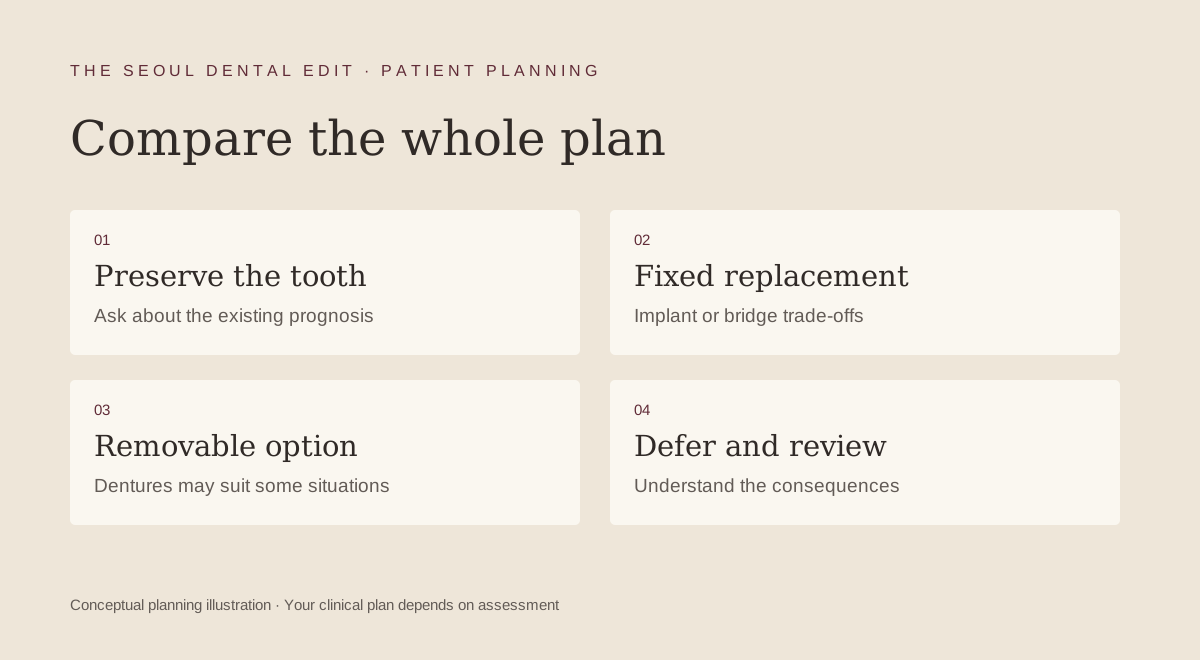
An implant can replace a tooth without using the neighboring teeth as its supports. A conventional bridge usually involves preparing supporting teeth, which may be reasonable if they already need substantial restoration. An adhesive bridge can require less preparation in suitable cases. A removable denture is another option, and some gaps can be left without immediate replacement when function and appearance permit. Compare surgery, tooth preparation, cleaning, repair and the condition of adjacent teeth. The right choice depends on the whole mouth rather than a claim that one method is always best.
References: Leeds Teaching Hospitals: Dental implants · Leeds Teaching Hospitals: Bridges
Understand the parts you are agreeing to
The implant fixture is the part placed in bone. An abutment connects it to the visible restoration, although component arrangements vary. The crown is the replacement tooth you see and use. Several teeth may instead be joined in a bridge, or implants may retain a removable denture. This distinction matters when reading a quotation: an advertised fixture price may not include the connecting part or final tooth. Ask the team to show the planned design and explain which components would need attention if a crown loosened or chipped.
References: FDA: Dental implants
What a useful assessment should establish
The consultation should examine the remaining teeth, gum support, bite, available space and the proposed final tooth position. Radiographs and, when justified, three-dimensional imaging help assess bone and nearby structures such as nerves or sinuses. Bring previous images, but let the clinician decide whether they answer the current questions. Photographs sent before travel can support a preliminary discussion; they cannot replace all findings from an examination. Request an explanation of what is confirmed, what remains uncertain and which findings could change the surgical plan.
References: Leeds Teaching Hospitals: Dental implants
Prepare for a decision-making consultation
Bring a short history of the missing or damaged tooth, previous treatment dates, current medicines and any available radiographs. Write down what you want to improve and what you would prefer to preserve. If you have an existing implant, include its identification record. At the appointment, ask the dentist to distinguish necessary treatment from optional appearance changes and to show how each proposed step relates to a finding. If more than one clinician is involved, identify who coordinates the plan. Request the explanation and instructions in a language you understand. After the conversation, you should be able to describe the alternatives, the stages and the main uncertainty in your own words. A preliminary remote estimate can help you prepare, but leave room for the in-person findings to change the recommendation.
References: Leeds Teaching Hospitals: Dental implants · CDC Yellow Book: Medical tourism
Medical history and habits influence planning
Tell the dentist about diabetes, smoking, previous healing problems, radiotherapy and all medicines, including infusions or injections that you do not take every day. Poorly controlled diabetes and smoking can make implant healing less predictable. The appropriate response may involve medical coordination, better disease control or postponing elective surgery. Do not stop prescribed treatment on your own. Ask who will contact your usual clinician if advice is needed, and obtain individual instructions about medicines, meals and any planned sedation. Honest information helps the team plan around your actual circumstances.
References: FDA: Dental implants · Cambridge University Hospitals: Implant insertion
When bone grafting changes the schedule
A graft may be proposed when the available bone does not support the intended implant position. Smaller defects can sometimes be managed during implant placement, while larger deficiencies may need a separate procedure and healing period. Graft materials can come from your own bone, donor, animal or synthetic sources; discuss relevant preferences before consent. Ask the surgeon to explain the deficiency, alternatives and how healing will be assessed. A graft adds treatment burden and may not produce enough bone as expected. In the upper back jaw, sinus anatomy can introduce another planning step.
References: Cambridge University Hospitals: Bone grafting
What happens at the surgical appointment
Implant placement is commonly performed with local anesthesia. The clinician prepares the bone at the planned site, inserts the fixture and manages the gum around it. Depending on the approach, a healing component may remain visible or the implant may initially be covered by gum. Additional procedures make the visit more complex. Agree how you will signal discomfort and ask about the expected appointment length for your case. If sedation is used, follow the team’s specific fasting, escort and supervision instructions; a routine taxi booking may not meet the discharge requirements.
References: Cambridge University Hospitals: Implant insertion
Same-day teeth still need a longer plan
Immediate placement means putting an implant into an extraction site at the same visit. Attaching a tooth early is a separate decision, and that tooth may be a temporary restoration with restrictions on biting. Suitability depends on the site and the stability achieved, among other factors. Ask what will happen if the planned early restoration cannot be fitted. A comfortable temporary tooth is useful, but it does not prove that bone healing is complete. Confirm when the final crown or bridge is expected and whether another trip is likely.
References: FDA: Dental implants · Leeds Teaching Hospitals: Dental implants
Plan visits around clinical milestones
Instead of asking only how many days to stay, request a schedule showing assessment, preparatory care, surgery, review and final restoration. The time between stages may be measured in months, particularly when bone must heal. More than one fitting or adjustment appointment may be necessary. Keep a practical buffer before departure and ask what would justify changing the schedule. A manufacturing shortcut cannot remove a biological healing stage. For a staged journey, clarify what evidence the clinic needs before you book the next flight and what you will wear between trips.
References: Leeds Teaching Hospitals: Dental implants · CDC Yellow Book: Medical tourism
Recovery: comfort, eating and when to seek help
Some discomfort, swelling or bruising can follow surgery, with the extent affected by the procedure and your response. Obtain written instructions for eating, cleaning, prescribed medicines and the temporary restoration rather than borrowing another patient’s routine. Contact the treating team for increasing pain, discharge, a loose component or symptoms that concern you. New or persistent numbness also needs assessment. Significant facial or mouth swelling with difficulty breathing or swallowing requires emergency care. When you are abroad, seek appropriate local help instead of waiting indefinitely for an overseas message reply.
References: Cambridge University Hospitals: Implant insertion · NHS: Dental abscess
Risks belong in the decision before surgery
Possible problems include infection, failure of an implant to integrate, damage to nearby tissues and later loss of supporting bone. The visible restoration can also chip or loosen while the implant itself remains stable. Ask which risks matter most in your anatomy and health history, and how the clinic would respond if the first plan could not be completed. A quoted survival percentage does not predict your personal outcome or describe every repair. The useful discussion connects your findings to realistic alternatives and a clear contingency plan.
References: FDA: Dental implants · American Academy of Periodontology: Peri-implant diseases
Compare the complete cost, including return care
Request a quotation that separates assessment, extraction if needed, grafting, the fixture, abutment, temporary teeth and definitive restoration. Distinguish recommended items from additions that depend on examination or surgery. Then include travel, accommodation, time away from work and ongoing maintenance in your own budget. Ask how changes are approved and what happens if a stage is delayed. Read repair terms carefully: replacing a component is different from paying for another operation or flight. An itemized comparison is more useful than a price attached to an implant brand alone.
References: FDA: Dental implants · CDC Yellow Book: Medical tourism
The final tooth should be comfortable to maintain
Before final acceptance, discuss the bite, contact with neighboring teeth, appearance and access for cleaning. Explain any food trapping, difficulty speaking or uncomfortable pressure. An attractive photograph does not show whether daily care is practical. Ask the team to demonstrate cleaning around the actual restoration and let you practise. Implant-supported bridges and removable overdentures have different access and servicing needs. Confirm who checks the restoration after fitting and how a repair would be arranged. These details matter as much as the surgical stage because they shape everyday use.
References: Leeds Teaching Hospitals: Dental implants · American Academy of Periodontology: Peri-implant diseases
Keep a maintenance and handover record
Implants cannot develop cavities, but their surrounding tissues can become inflamed. Peri-implantitis involves loss of supporting bone, so bleeding or swelling deserves attention rather than being dismissed because the implant is artificial. Arrange professional reviews according to your risk and restoration. Before leaving Korea, obtain the implant system and component details, relevant images, treatment summary and contact route for concerns. Ask your regular dentist what follow-up they can provide. A remote conversation may help triage a problem, but cannot always replace an examination or repair.
References: American Academy of Periodontology: Peri-implant diseases · CDC Yellow Book: Medical tourism
Recommended listed clinics and doctors to explore
For an implant consultation, consider Origin Dental Clinic in Gangnam and its listed clinician Dr. Gak-gyun Noh. The clinic’s official implant page describes implant placement, bone-graft options and maintenance, and identifies Dr. Noh as leading implant and prosthetic care. This makes the practice relevant when you want to discuss both the replacement tooth and ongoing care. Lime Tree Dental Hospital in Myeongdong is another listed option: its international site includes implant treatment, grafting and revision services, while its official biography presents Dr. Insu Kim as chief director with an implant focus. These recommendations are based on the published service match, current platform listings and an international enquiry route, not comparative outcome claims. Review the profiles and ask which clinician would manage each stage of your individual plan.
References: Origin Dental Clinic: Implant service · Origin Dental Clinic: Dr. Gak-gyun Noh · Lime Tree Dental Hospital: International website · Lime Tree Dental Hospital: Dr. Insu Kim
Can I get an implant in Seoul during one short holiday?
You may be able to complete an assessment or surgical stage, but that is different from finishing the entire restoration. Healing and laboratory stages may require later visits. Ask for a plan that names the temporary tooth, the final tooth, required reviews and the criteria for booking your return trip.
What should I ask before paying a deposit?
Ask which tooth needs replacement, why an implant is proposed over alternatives, who performs surgery and restoration, and what the written price includes. Clarify changes after examination, cancellation terms, follow-up and responsibility for repairs at home. Do not let travel bookings substitute for understanding an irreversible treatment decision.
Explore the care and related reading
Provider profile — Origin Dental Clinic >
International website — Origin Dental Clinic >
Official treatment information — Origin Dental Clinic >
Provider profile — Dr. Gak-gyun Noh >
International consultation website — Dr. Gak-gyun Noh >
International website — Dr. Gak-gyun Noh >
Provider profile — Lime Tree Dental Hospital >
International website — Lime Tree Dental Hospital >
Provider profile — Dr. Insu Kim >
International consultation website — Dr. Insu Kim >
International website — Dr. Insu Kim >
Single-tooth implant or dental bridge >
Immediate implants and same-day teeth >
Bone grafting before dental implants >
Sinus assessment for upper-jaw implants >
Implant health and long-term maintenance >
Explore related care in Seoul
These profiles describe published clinical interests and services. Compare the team and ask whether the proposed care fits your diagnosis.
- S-Face Dental Clinic — Apgujeong · Gangnam
- Origin Dental Clinic — Gangnam
- Dr. Gin-Ah Song — Oral and maxillofacial surgery at S-Face Dental Clinic.
- Dr. Gak-gyun Noh — Restorative and implant dentistry at Origin Dental Clinic.
Clinical references and further reading for the explanations on this page. The guide is general patient education; your dentist determines the plan for your examination findings.
FDA: Dental implants >Leeds Teaching Hospitals: Dental implants >Leeds Teaching Hospitals: Bridges >Cambridge University Hospitals: Bone grafting >Cambridge University Hospitals: Implant insertion >American Academy of Periodontology: Peri-implant diseases >CDC Yellow Book: Medical tourism >NHS: Dental abscess >Origin Dental Clinic: Implant service >Origin Dental Clinic: Dr. Gak-gyun Noh >Lime Tree Dental Hospital: International website >Lime Tree Dental Hospital: Dr. Insu Kim >